


English



₹2855
₹2976
4.07% OFF
(All inclusive*)
Paperback
Delivery Options
Please enter pincode to check delivery time.
*COD & Shipping Charges may apply on certain items.
Review final details at checkout.
Looking to place a bulk order? SUBMIT DETAILS
Delivery Options
Please enter pincode to check delivery time.
*COD & Shipping Charges may apply on certain items.
Review final details at checkout.
About The Book
Description
Author(s)
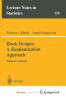
In most of the literature on block designs when considering the analysis of experimental results it is assumed that the expected value of the response of an experimental unit is the sum of three separate components a general mean parameter a parameter measuring the effect of the treatment applied and a parameter measuring the effect of the block in which the experimental unit is located. In addition it is usually assumed that the responses are uncorrelated with the same variance. Adding to this the assumption of normal distribution of the responses one obtains the so-called normal-theory model on which the usual analysis of variance is based. Referring to it Scheffe (1959 p. 105) writes that there is nothing in the 'normal-theory model' of the two-way layout . . . that reflects the increased accuracy possible by good blocking. Moreover according to him such a model is inappropriate to those randomized-blocks experiments where the 'errors' are caused mainly by differences among the experimental units rather than measurement errors. In view of this opinion he has devoted one of the chapters of his book (Chapter 9) to randomization models being convinced that an understanding of the nature of the error distribution generated by the physical act of randomization should be part of our knowledge of the basic theory of the analysis of variance.

Piracy-free

Assured Quality

Secure Transactions

Fast Delivery

Sustainably Printed
Details
ISBN 13
9781461211938
Publication Date
-07-09-2011
Pages
-332
Weight
-473 grams
Dimensions
-156x234x17.6 mm
