

English


Paperback
₹8222
₹9525
13.68% OFF
(All inclusive*)
Delivery Options
Please enter pincode to check delivery time.
*COD & Shipping Charges may apply on certain items.
Review final details at checkout.
Looking to place a bulk order? SUBMIT DETAILS
Delivery Options
Please enter pincode to check delivery time.
*COD & Shipping Charges may apply on certain items.
Review final details at checkout.
About The Book
Description
Author(s)
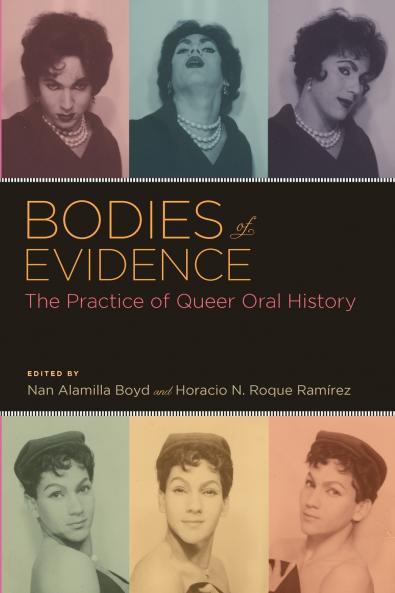
When written sources are scarce historians often turn to oral histories for evidence. Bodies of Evidence: The Practice of Queer Oral History is the first book to provide serious scholarly insight into the methodological practices that shape lesbian gay bisexual transgender and queer oral histories. The volume opens up a critical dialogue on the challenges of creating an archive of queer lives. Highlighting the work of fourteen authors who focus their research on queer community history culture and politics each chapter pairs an oral history excerpt with an original essay in which the oral historian addresses his or her methods and practices. With an afterword by the preeminent scholar in the field John D''Emilio this collection enables readers to examine both a series of oral histories and analysis of the role memory desire sexuality and gender play in documenting LGBTQ communities and cultures.The historical themes addressed within include lesbian bar history in San Francisco (c. 1940s 1950s); early homophile organizing and social activism in Los Angeles (c. 1950s and 1960s); Third World Liberation and feminist antiwar activism in the U.S. and Canada (c. 1960s 1970s); electoral politics and the career of Harvey Milk the first openly gay elected official in San Francisco (1970s); Latino AIDS memory and activism in San Francisco (1980s 1990s); and the war in Iraq (2000s). The methodological themes addressed in this book that are relevant to the practice of oral history include questions of sexual self-disclosure and voyeurism in the uses of oral history methods by queer studies scholars; the intimacy between researcher and narrator negotiated through multiple oral history interviews and on-going casual conversations; the production of comparative racial and sexual identities within the context of oral history interviews; the production of in-group mythology by same-sexuality interviewing--and the possible benefits of cross-sexuality and cross-ideology interviewing; what heterosexually-identified narrators can tell us about LGBTQ life and death; the silences imposed by repressive U.S. government policy about sexual self-disclosure and the limits of permissible speech in highly politicized discourses such as gays in the military. These themes provide new and insightful structures for thinking about oral history methods--both in general and in relation to the production of LGBTQ history.

Piracy-free

Assured Quality

Secure Transactions

Fast Delivery

Sustainably Printed
Details
ISBN 13
9780199742738
Publication Date
-01-02-2012
Pages
-306
Weight
-438 grams
Dimensions
-156x234x16.28 mm
