

English


Paperback
₹2848
₹3417
16.65% OFF
(All inclusive*)
Delivery Options
Please enter pincode to check delivery time.
*COD & Shipping Charges may apply on certain items.
Review final details at checkout.
Looking to place a bulk order? SUBMIT DETAILS

Piracy-free

Assured Quality

Secure Transactions
About The Book
Description
Author
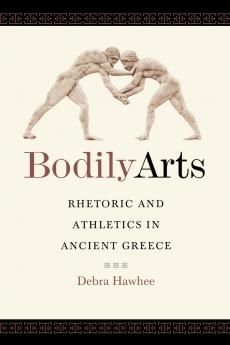
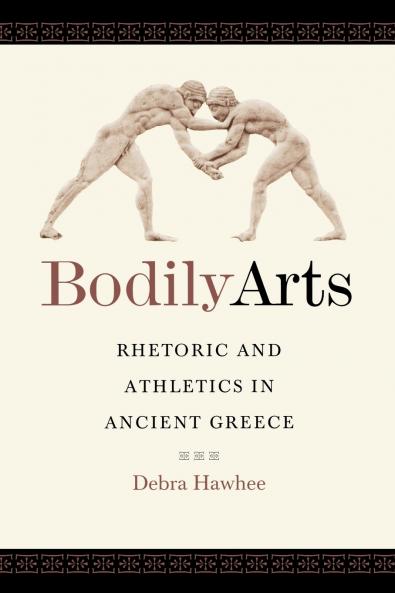
<p>The role of athletics in ancient Greece extended well beyond the realms of kinesiology competition and entertainment. In teaching and philosophy athletic practices overlapped with rhetorical ones and formed a shared mode of knowledge production. <i>Bodily Arts</i> examines this intriguing intersection offering an important context for understanding the attitudes of ancient Greeks toward themselves and their environment.</p> <p>In classical society rhetoric was an activity one that was in essence performed. Detailing how athletics came to be rhetoric's twin art in the bodily aspects of learning and performance <i>Bodily Arts</i> draws on diverse orators and philosophers such as Isocrates Demosthenes and Plato as well as medical treatises and a wealth of artifacts from the time including statues and vases.</p> <p>Debra Hawhee's insightful study spotlights the notion of a classical gymnasium as the location for a habitual mingling of athletic and rhetorical performances and the use of ancient athletic instruction to create rhetorical training based on rhythm repetition and response. Presenting her data against the backdrop of a broad cultural perspective rather than a narrow disciplinary one Hawhee presents a pioneering interpretation of Greek civilization from the sixth fifth and fourth centuries BCE by observing its citizens in action.</p>
Piracy-free
Assured Quality
Secure Transactions
Delivery Options
Please enter pincode to check delivery time.
*COD & Shipping Charges may apply on certain items.
Review final details at checkout.
Details
ISBN 13
9780292721401
Publication Date
-15-01-2005
Pages
-244
Weight
-336 grams
Dimensions
-152x229x14.07 mm
