

English


Paperback
₹4195
(All inclusive*)
Delivery Options
Please enter pincode to check delivery time.
*COD & Shipping Charges may apply on certain items.
Review final details at checkout.
Looking to place a bulk order? SUBMIT DETAILS

Piracy-free

Assured Quality

Secure Transactions
About The Book
Description
Author
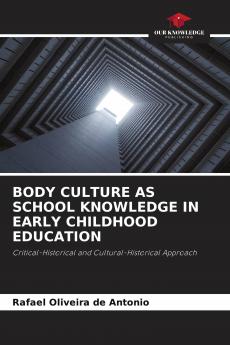
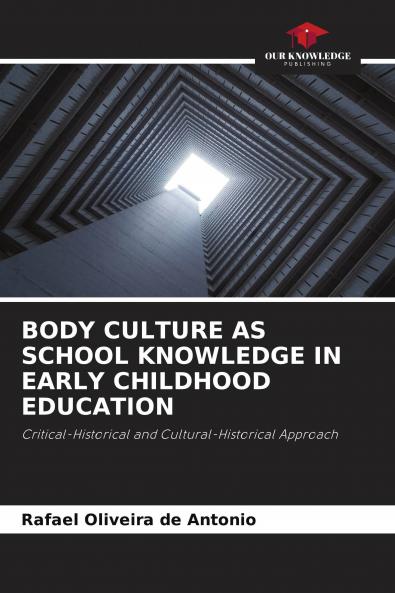
Although the practice of physical exercise in child development is advocated by educators and society in general it does not always receive a pedagogical treatment in early childhood education schools. Recreation and motor development are the justifications for the presence of this content in the school environment. When we take as theoretical references the critical-superior approach to physical education the critical-historical pedagogy and the cultural-historical psychology physical exercise stops being only a motor activity or mere amusement to become a knowledge in the form of body culture. Thus the body culture as school knowledge since childhood education reconstitutes in each singular subject the body practices historically created by human beings characterized by being non-utilitarian and having a corporal nature. Thus the teaching contents of body culture can be incorporated into the conscious personality of the student aiming at an omnilateral formation i.e. it is part of the knowledge that needs to be socialized by the school of early childhood education aiming at a full social formation of the child.
Piracy-free
Assured Quality
Secure Transactions
Delivery Options
Please enter pincode to check delivery time.
*COD & Shipping Charges may apply on certain items.
Review final details at checkout.
Details
ISBN 13
9786204257006
Publication Date
-11-11-2021
Pages
-52
Weight
-81 grams
Dimensions
-150x220x3.27 mm
