



English




Hardback
₹8987
₹12154
26.06% OFF
(All inclusive*)
Delivery Options
Please enter pincode to check delivery time.
*COD & Shipping Charges may apply on certain items.
Review final details at checkout.
Looking to place a bulk order? SUBMIT DETAILS
Delivery Options
Please enter pincode to check delivery time.
*COD & Shipping Charges may apply on certain items.
Review final details at checkout.
About The Book
Description
Author
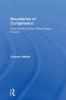
<p>The term social science promises more than its practitioners can deliver: it promises knowledge. This knowledge is to consist of statements of empirical regularities of such quality as will enhance predictive power and inform public and private policy. <em>Boundaries of Competence</em> illuminates obstacles to this aspiration.</p><p>Chapter 1 grounds knowledge in perception. Chapter 2 challenges the assumption that ordinary language necessarily describes reality and reveals the mischief words can do. Chapter 3 proposes a continuum of perceiving-conceiving involved in different ways of knowing worlds. Chapter 4 lays out requirements of measurement arguing that assigning numbers to dubious observations gives false assurance that mathematical manipulations necessarily rep- resent events.</p><p>Chapter 5 shows how choice of unit affects the correlations we find in our search for causes. Chapter 6 holds that given deficiencies in knowledge and perhaps because of the way Nature works we assess probabilities rather than seek certainties. Chapter 7 notes difficulties in counting events that consist of social facts which depend on us and those that refer to brute facts that exist independently of us. Chapter 8 criticizes the practice of employing proxies for observations of what we're talking about. In particular it demonstrates the error produced by relying on what people say as measure of what they do.</p><p>Chapter 9 criticizes ways of explaining conduct by characterizing actors and their acts and by understanding them through empathy. Chapter 10 discusses the important and never-ending quarrel about causation. Chapters 11 and 12 argue that in social affairs decision is regularly torn between doing what is effective (rational) and doing what is right (moral).</p><p>Nettler's writing is crisp and his argument balanced. He employs research from several disciplines to challenge ideologically driven descriptions of our condition and explanations of our conduct.</p>

Piracy-free

Assured Quality

Secure Transactions

Fast Delivery

Sustainably Printed
Details
ISBN 13
9780765801791
Publication Date
-30-06-2003
Pages
-336
Weight
-544 grams
Dimensions
-152x229x19.26 mm
Imprint
-Taylor & Francis
