

by
English


Hardback
₹11452
₹15264
24.97% OFF
(All inclusive*)
Delivery Options
Please enter pincode to check delivery time.
*COD & Shipping Charges may apply on certain items.
Review final details at checkout.
Looking to place a bulk order? SUBMIT DETAILS

Piracy-free

Assured Quality

Secure Transactions
About The Book
Description
Author(s)
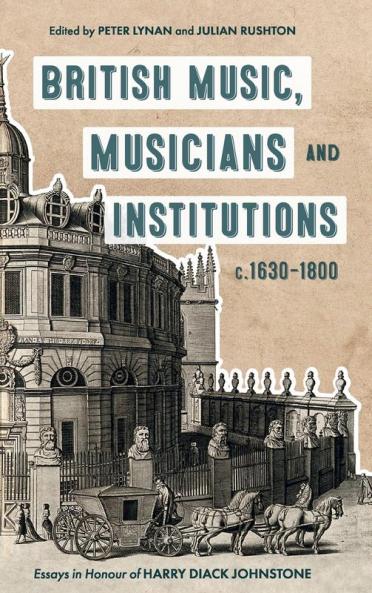
British music in the era from the death of Henry Purcell to the so-called 'Musical Renaissance' of the late nineteenth century was once considered barren. This view has been overturned in recent years through a better-informed historical perspective able to recognise that all kinds of British musical institutions continued to flourish and not only in London. The publication performance and recording of music by seventeenth- and eighteenth-century British composers supplemented by critical source-studies and scholarly editions shows forms of music that developed in parallel with those of Britain's near neighbours. Indigenous musicians mingled with migrant musicians from elsewhere yet there remained strands of British musical culture that had no continental equivalent. Music vocal and instrumental sacred and secular flourished continuously throughout the Stuart and Hanoverian monarchies. Composers such as Eccles Boyce Greene Croft Arne and Hayes were not wholly overshadowed by European imports such as Handel and J. C. Bach. The present volume builds on this developing picture of the importance of British music musicians and institutions during the period. Leading musicologists investigate themes such as composition performance (amateur and professional) and music-printing within the wider context of social religious and secular institutions.
Piracy-free
Assured Quality
Secure Transactions
Delivery Options
Please enter pincode to check delivery time.
*COD & Shipping Charges may apply on certain items.
Review final details at checkout.
Details
ISBN 13
9781783276479
Publication Date
-05-11-2021
Pages
-318
Weight
-546 grams
Dimensions
-156x234x19.05 mm
