

English


₹2677
₹3841
30.3% OFF
(All inclusive*)
Paperback
Delivery Options
Please enter pincode to check delivery time.
*COD & Shipping Charges may apply on certain items.
Review final details at checkout.
Looking to place a bulk order? SUBMIT DETAILS
Delivery Options
Please enter pincode to check delivery time.
*COD & Shipping Charges may apply on certain items.
Review final details at checkout.
About The Book
Description
Author(s)
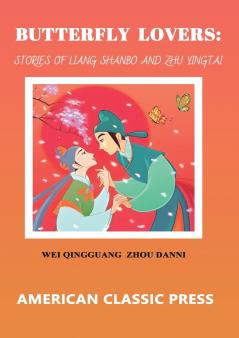
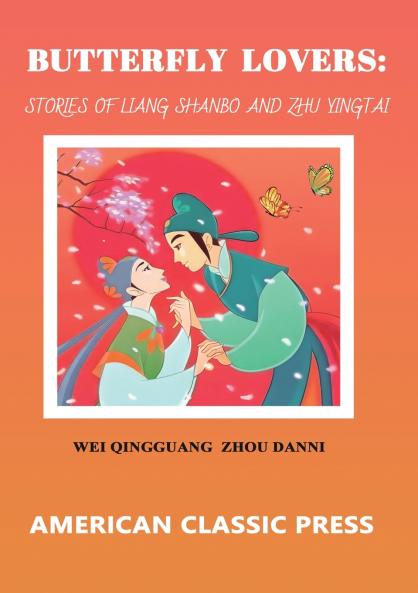
<p>Butterfly Lovers: Stories&nbsp;of Liang Shanbo and Zhu Yingtai&nbsp;stands as one of the four monumental love stories of ancient China along&nbsp;with&nbsp;The Legend of the White Snake The Tale of Lady Meng Jiang and The Cowherd and the Weaver Girl. In 2006 it achieved recognition as a national-level Intangible Cultural Heritage of China.</p><p>The story&nbsp;of Liang Shanbo and Zhu Yingtai finds its roots in the Eastern Jin Dynasty (317-420) and has enchanted various parts of China for over 1700 years. The synopsis&nbsp;of the story&nbsp;is as follows:</p><p>In ancient China societal norms forbade women from showing&nbsp;themselves&nbsp;in public. Zhu Yingtai a teenage girl yearning for an education in Hangzhou cleverly disguised herself as a man. During her journey she encountered Liang Shanbo and the two established a deep bond becoming sworn brothers. For three years they studied side by side during the day and shared one&nbsp;bed at night. As Yingtai prepared to leave school she subtly revealed her feelings for Shanbo who remained oblivious due to his ignorance of Yingtai's true identity. Upon returning home Yingtai was coerced into marrying another man. Learning of this Shanbo was struck by despair fell gravely ill and soon passed away. On her wedding journey Yingtai leaped into Shanbo's tomb culminating in their transformation into butterflies that flew away together.</p><p>Initially the story&nbsp;of Liang Shanbo and Zhu Yingtai circulated predominantly within the Han ethnic group. Thanks to&nbsp;migration military placements and educational pursuits the tale&nbsp;gradually permeated areas inhabited by various ethnic groups. Each ethnic group&nbsp;embraced the tale with affection often adapting it in alignment with their cultural traditions and aesthetic sensibilities. For instance in the version cherished by the Miao ethnic group Liang Shanbo and Zhu Yingtai metamorphose into dragons not butterflies upon their death. In the She ethnic group's rendition Shanbo and Yingtai transform into trees after death only to revert back to human form later. In the Zhuang ethnic group's telling the narrative unfolds in Liuzhou not Hangzhou with Shanbo and Yingtai's butterfly forms eventually transforming back into humans. In the Yao ethnic group's version Zhu Yingtai's hometown is set in Emeishan rather than Zhujia Village.&nbsp;In the version favored by the Mulao ethnic group Zhu Yingtai's hometown remains Emeishan but her place of study shifts to Lushan instead of Hangzhou culminating in the transformation of Shanbo and Yingtai into mandarin ducks. The Tujia ethnic group's rendition however is a more somber one where Shanbo and Yingtai meet a tragic end without any transformation. The Bai ethnic group presents a tale of multiple transformations: Shanbo and Yingtai first morph into stone lions then into willow trees later into mandarin ducks after the willow trees are felled and finally into butterflies. In the various adaptations popular among different ethnic groups the name of Zhu Yingtai's intended spouse introduced by the matchmaker varies as well including Ma Hong Ma Jun Ma Wencai Ma Guang and Ma Jia among others.</p><p>In this book the translators&nbsp;have meticulously assembled a collection of diverse versions of The Story of Liang Shanbo and Zhu Yingtai sourced from the rich cultural traditions of the Han Miao She Zhuang Yao Mulao Tujia and Bai ethnic groups. The&nbsp;aim is to showcase the exchanges and interactions of folk literature among the various ethnic groups in China. </p>

Piracy-free

Assured Quality

Secure Transactions

Fast Delivery

Sustainably Printed
Details
ISBN 13
9798330415397
Publication Date
-25-12-2024
Pages
-300
Weight
-366 grams
Dimensions
-148x210x20.71 mm
