


English



Paperback
₹2543
₹2577
1.32% OFF
(All inclusive*)
Delivery Options
Please enter pincode to check delivery time.
*COD & Shipping Charges may apply on certain items.
Review final details at checkout.
Looking to place a bulk order? SUBMIT DETAILS

Piracy-free

Assured Quality

Secure Transactions
About The Book
Description
Author
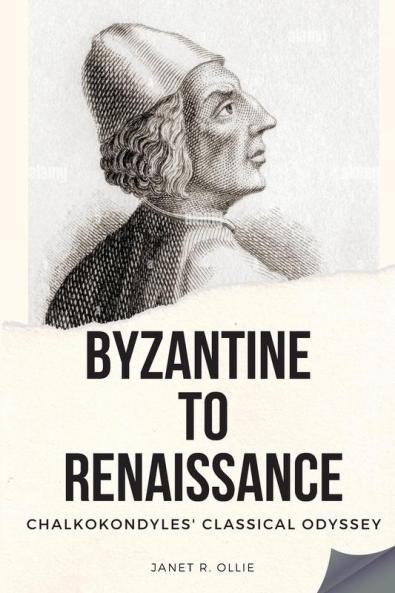
<p>The fall of Constantinople in 1453 to the Ottoman armies led by Mehmed II marked a momentous event that had far-reaching repercussions across Renaissance Europe. This event catalyzed the migration of Byzantines to various regions including Italy carrying with them the rich heritage of Greek antiquity. Among the figures contributing to the Renaissance was Laonikos Chalkokondyles whose work held particular significance. His detailed application of Herodotos' historical methods to the fifteenth century titled Apodeixis Historion served as a lens through which he interpreted the rise of the Ottoman Empire in light of ancient history. This work printed in Latin French and Greek achieved widespread success.</p><p>Chalkokondyles' historical approach rejuvenated ancient categories such as ethnicity political governance language and geography to provide insight into contemporary events and societies. By restoring these Herodotean concepts he offered a framework to understand the dynamics of his time. In this endeavor he markedly diverged from the approaches taken by previous Byzantine historians demonstrating a departure that can be termed revolutionary classicizing.</p><p>This term encapsulates Chalkokondyles' innovative approach to historical interpretation. Instead of adhering to the traditional model of lawful imperial rule he reintroduced the notion of oriental tyranny when describing the emerging Ottoman state. While his emulation of ancient classics might appear on the surface his revival of political concepts represented a radical departure from the norm. Notably he reintroduced the idea of city-states as distinct ethnic units emphasized freedom as independence from foreign domination and highlighted law-giving as a core element of Hellenic tradition-a concept not typically extended to the Christian era.</p><p>Chalkokondyles' work illustrates the complex relationship between historical interpretation and contemporary perspectives. By applying ancient methodologies to his time he crafted a new understanding of political structures and principles. In essence his revolutionary classicizing approach exemplified how the past could be reimagined and repurposed to comprehend the evolving world ultimately contributing to the transformative period of the Renaissance.</p>
Piracy-free
Assured Quality
Secure Transactions
Delivery Options
Please enter pincode to check delivery time.
*COD & Shipping Charges may apply on certain items.
Review final details at checkout.
Details
ISBN 13
9782048986072
Publication Date
-28-08-2023
Pages
-314
Weight
-427 grams
Dimensions
-152x229x16.69 mm
