

English


Paperback
₹3359
₹3697
9.14% OFF
(All inclusive*)
Delivery Options
Please enter pincode to check delivery time.
*COD & Shipping Charges may apply on certain items.
Review final details at checkout.
Looking to place a bulk order? SUBMIT DETAILS
Delivery Options
Please enter pincode to check delivery time.
*COD & Shipping Charges may apply on certain items.
Review final details at checkout.
About The Book
Description
Author
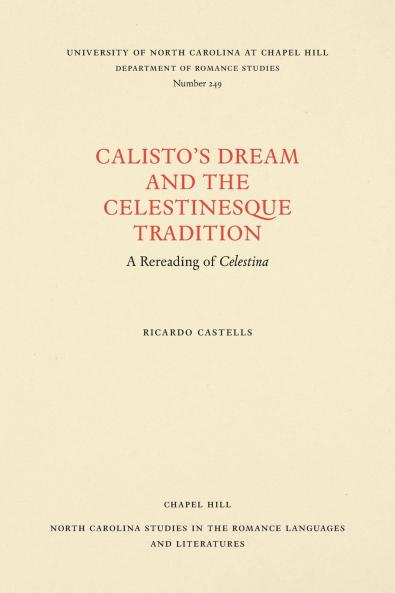
Fernando de Rojas's <i>Celestina</i> written in the late fifteenth century opens with an enigmatic conversation between Calisto and Melibea which has puzzled scholars trying to resolve the apparent contradictions in the work as a whole. Ricardo Castells supports the idea that the scene represents Calisto's dream about his beloved Melibea. In this study Castells examines later Celestinesque works as a lens through which we might better understand <i>Celestina</i>. Castells focuses on Calisto's creative use of borrowed text and speech and contends that Melibea demonstrates a surprisingly strong and consistent personality. He argues that Celestina's role is somewhat diminished in Rojas's continuation of the text as a result of this greater independence in Melibea's character.

Piracy-free

Assured Quality

Secure Transactions

Fast Delivery

Sustainably Printed
Details
ISBN 13
9780807892534
Publication Date
-01-01-1995
Pages
-144
Weight
-205 grams
Dimensions
-152x229x8.52 mm
