


English


Paperback
₹1923
₹1966
2.19% OFF
(All inclusive*)
Delivery Options
Please enter pincode to check delivery time.
*COD & Shipping Charges may apply on certain items.
Review final details at checkout.
Looking to place a bulk order? SUBMIT DETAILS
Delivery Options
Please enter pincode to check delivery time.
*COD & Shipping Charges may apply on certain items.
Review final details at checkout.
About The Book
Description
Author
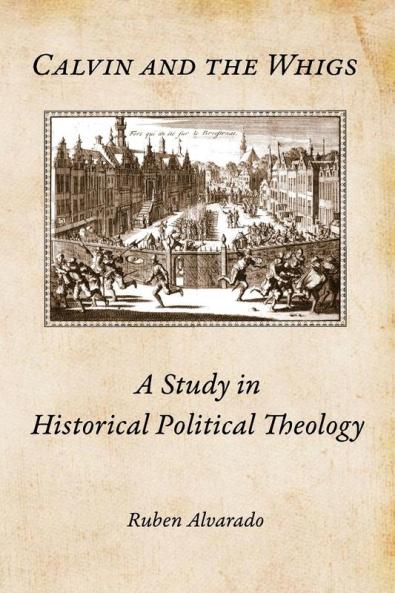
<p>The relationship between Calvinist political theory and John Locke&rsquo;s<br /><em>Two Treatises on Civil Government </em>has been debated for some time and<br />the consensus is that Locke&rsquo;s theory constitutes the further<br />development of Calvinist theory. But upon closer analysis that<br />conclusion proves entirely flawed. Calvinism proves to be worlds apart<br />from the political philosophy of John Locke. It proves to be the mature<br />fruit of the medieval &ldquo;two swords&rdquo; form of government in which church<br />and state share public power rather than an early stage on the road to the<br />dissociation of church and state a road which Locke put us firmly upon<br />with his own formulation of political power. Indeed upon closer<br />inspection Calvinism proves to be the product of a thousand-year<br />tradition of Western political thought commencing with Augustine<br />and moving through the Carolingian Renaissance and the Papal<br />Revolution. That history is rediscovered and outlined in this book as<br />the preliminary means for recovering the true meaning of political<br />Calvinism and its utter discontinuity with the modernism that<br />commenced with Locke&rsquo;s paradigm. It also helps disabuse us of the<br />notion that history is linear and that progress is straightforward. Rather<br />it helps us to understand the deformational period of history in which<br />we live and the need for a return to a confessional understanding of law<br />the state and constitutionalism.</p>

Piracy-free

Assured Quality

Secure Transactions

Fast Delivery

Sustainably Printed
Details
ISBN 13
9789076660479
Publication Date
-07-04-2017
Pages
-198
Weight
-276 grams
Dimensions
-152x229x11.53 mm
