

English


Hardback
₹13431
₹17304
22.38% OFF
(All inclusive*)
Delivery Options
Please enter pincode to check delivery time.
*COD & Shipping Charges may apply on certain items.
Review final details at checkout.
Looking to place a bulk order? SUBMIT DETAILS
Delivery Options
Please enter pincode to check delivery time.
*COD & Shipping Charges may apply on certain items.
Review final details at checkout.
About The Book
Description
Author
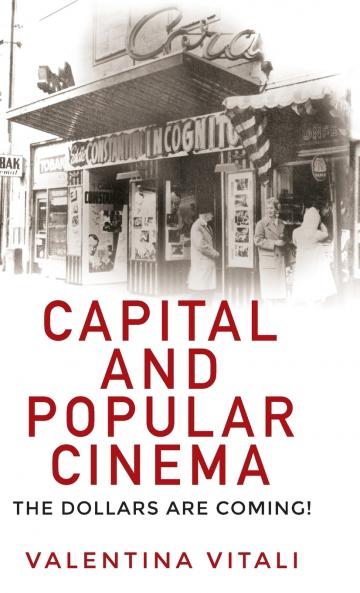
<p>Popular cinema has mostly been discussed from a 'cult' perspective that celebrates uncritically its 'transgressive' qualities. <i>Capital and popular cinema</i> responds to the need for a more solid academic approach by situating 'low' film genres in their economic and culturally-specific contexts and by exploring the interconnections between those contexts the immediate industrial-financial interests sustaining the films and the films' aesthetics. Through the examination of three different cycles in film production - the Italian g<i>iallo</i> of Mario Bava the Mexican films of Fernando Méndez and the Hindi horror cinema of the Ramsay Brothers - <i>Capital and popular cinema</i> proposes a comparative approach that accounts for the whole of a national film industry's production ('popular' and 'canonic') and is applicable to the study of film genres globally.<br><br>Based on new research <i>Capital and popular cinema</i> will be of interest to undergraduate and post-graduate students researchers and scholars of cult and exploitation cinema genre cinema national cinema film and media theory and area studies.</p>

Piracy-free

Assured Quality

Secure Transactions

Fast Delivery

Sustainably Printed
Details
ISBN 13
9780719099656
Publication Date
-07-04-2016
Pages
-232
Weight
-354 grams
Dimensions
-140x216x17.46 mm
