

English



Paperback
₹6204
(All inclusive*)
Delivery Options
Please enter pincode to check delivery time.
*COD & Shipping Charges may apply on certain items.
Review final details at checkout.
Looking to place a bulk order? SUBMIT DETAILS
Delivery Options
Please enter pincode to check delivery time.
*COD & Shipping Charges may apply on certain items.
Review final details at checkout.
About The Book
Description
Author
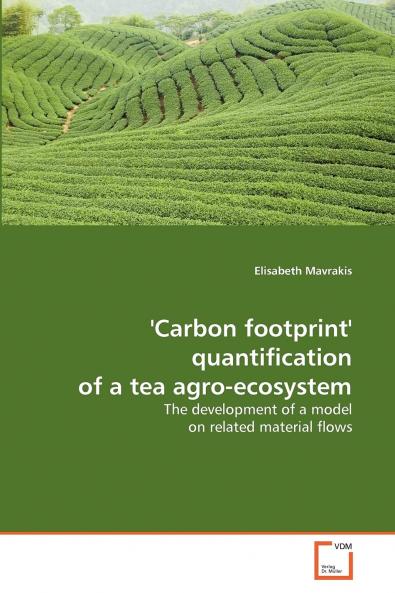
Climate change is one of the major challenges of the 21st century and in fact it is the developing countries that are affected most by the inherent impacts. ‘Farmers have custody of more environment than does any other group' (Paarlberg 1980). Since agriculture is the mainstay of 75 percent of the developing world's poor and in the context of climate change this sector plays a particular role being able to function as both a sink and a source of GHG emissions. Therefore it is quite amazing that agriculture is not adequately considered as a potential field to enhance climate change mitigation in fact. Tea is one of the most important foreign exchange earners that is especially cultivated by smallholders in developing countries. In consequence of the very particular inherent management practices several studies indicate a high CO2 sequestration capacity of tea plantations. This study elucidates the particular carbon flows of a tea ecosystem amplifying the most important plant and soil parameters. Moreover it designs a carbon model comprising the simulation of several scenarios and different climate change predictions.

Piracy-free

Assured Quality

Secure Transactions

Fast Delivery

Sustainably Printed
Details
ISBN 13
9783639368901
Publication Date
-13-07-2011
Pages
-132
Weight
-190 grams
Dimensions
-150x220x7.38 mm
