



This Book is Out of Stock!
English




Hardback
₹15360
₹22071
30.41% OFF
(All inclusive*)
Delivery Options
*COD & Shipping Charges may apply on certain items.
Review final details at checkout.
Looking to place a bulk order? SUBMIT DETAILS
*COD & Shipping Charges may apply on certain items.
Review final details at checkout.
₹15360
₹22071
30% OFF
Hardback
Out Of Stock
All inclusive*
About The Book
Description
Author
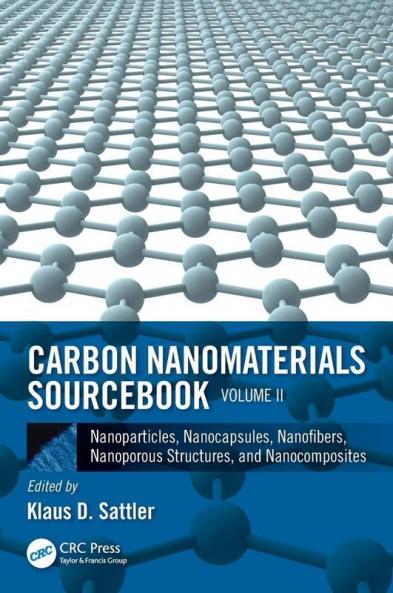
<p>The <strong>Carbon Nanomaterials Sourcebook</strong> contains extensive, interdisciplinary coverage of carbon nanomaterials, encompassing the full scope of the field—from physics, chemistry, and materials science to molecular biology, engineering, and medicine—in two comprehensive volumes.</p><p>Written in a tutorial style, this second volume of the sourcebook:</p><ul> <p> </p> <li>Focuses on nanoparticles, nanocapsules, nanofibers, nanoporous structures, and nanocomposites</li> <li>Describes the fundamental properties, growth mechanisms, and processing of each nanomaterial discussed</li> <li>Explores functionalization for electronic, energy, biomedical, and environmental applications</li> <li>Showcases materials with exceptional properties, synthesis methods, large-scale production techniques, and application prospects</li> <li>Provides the tools necessary for understanding current and future technology developments, including important equations, tables, and graphs</li> </ul><p>Each chapter is dedicated to a different type of carbon nanomaterial and addresses three main areas: formation, properties, and applications. This setup allows for quick and easy search, making the <strong>Carbon Nanomaterials Sourcebook: Nanoparticles, Nanocapsules, Nanofibers, Nanoporous Structures, and Nanocomposites</strong> a must-have reference for scientists and engineers.</p> <p>Carbyne: A One-Dimensional Carbon Allotrope. Linear Carbon Chains. Carbon Nanocoils. Carbon Nanohorns. Geodesic Arenes. Cubic Carbon Polymorphs. High-Energy-Synthesized Carbon-Related Nanomaterials. Activated Carbon Nanogels. Activated Carbon Nanoadsorbents. Heteroatom-Doped Nanostructured Carbon Materials. Fluorinated 0D, 1D, and 2D Nanocarbons. Activated Carbon Nanofibers. Electrospun Carbon Nanofibers. Carbon-Based Nanomaterials as Nanozymes. Hollow Carbon Nanocapsules. Hollow Fluorescent Carbon Nanoparticles. Metal-Filled Carbon Nanocapsules. Carbon-Coated Nanoparticles. Conjugated Carbon Nanocapsules. Nanoporous Carbon Membranes. Gas-Adsorbing Nanoporous Carbons. Nanoporous Carbon Fibrous Materials. Mesoporous Carbon Nanomaterials. Silicon Nanocrystal/Nanocarbon Hybrids. Graphene/Carbon Nanotube Aerogels. Nanotube–Cement Composites. Transition Metal/Carbon Nanocomposites. Nanocarbon Hybrid Materials. Nanographite–Polymer Composites. Graphite- and Graphene-Based Nanocomposites.</p>

Piracy-free

Assured Quality

Secure Transactions

Fast Delivery

Sustainably Printed
Details
ISBN 13
9781482252705
Publication Date
-26-04-2016
Pages
-754
Weight
-1672 grams
Dimensions
-178x254x35.93 mm
