


by
English




Paperback
₹5914
₹7576
21.94% OFF
(All inclusive*)
Delivery Options
Please enter pincode to check delivery time.
*COD & Shipping Charges may apply on certain items.
Review final details at checkout.
Looking to place a bulk order? SUBMIT DETAILS

Piracy-free

Assured Quality

Secure Transactions
About The Book
Description
Author(s)
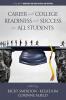
<p>Most Americans no longer question whether and which students should be prepared for college. Rather it is now widely accepted that ALL students should be prepared for postsecondary education in some form (e.g. certificate 2- or 4-year degree) as these credentials are not only required for many jobs but are also the surest path to upward mobility (Carnevale Rose Cheah 2011). There is also greater recognition that in addition to a more traditional approach to preparation for postsecondary education (e.g. taking college preparatory classes) students should also graduate high school with technical knowledge and employability skills to secure retain and advance their employment when they leave school at whatever level that may be. Simply put today&rsquo;s high school graduates need a broad-based education that combines an array of knowledge skills and experiences to prepare them for life after high school. And indeed state&rsquo;s definitions of college and career readiness have broadened in recent years to include a variety of skills and dispositions such as critical thinking skills social emotional skills such as collaboration and interpersonal skills such as resilience and perseverance (English Rasmussen Cushing &amp; Therriault 2016).</p><p><br />The Every Student Succeeds Act (ESSA) of 2015 the key federal K-12 legislation explicitly supports the notion of a &ldquo;well-rounded&rdquo; student emphasizing readiness in areas beyond its predecessor&rsquo;s (the No Child Left Behind Act or NCLB) focus on core academic content. ESSA mandates that states ensure that students are provided an enriched accelerated curriculum beyond courses and content areas in which state assessments are given (e.g. mathematics reading) and that is aligned with the postsecondary experiences students are likely to encounter. ESSA also supports an expansion of readiness goals through provisions for the improvement of conditions for student learning that support social-emotional learning intrapersonal skills and other employability skills. And ESSA includes provisions in states&rsquo; accountability systems that support emphasis on broader definitions of readiness. Additionally ESSA&rsquo;s accountability framework includes important principles for supporting a broader definition of what students need to know and be able to do once they graduate high school. Accountability systems under ESSA may include multiple measures of college and career readiness. Indeed several states had already added a career-focused indicator prior to ESSA passing (such as pathway completion or technical assessment achievement) to their accountability systems and the number of states publicly reporting such indicators continues to increase (Achieve &amp; AdvanceCTE 2016).</p><p>As definitions and measures of college and career readiness continue to evolve we know one thing for sure: we need to better prepare ALL students for success after high school. This book explores the ways in which some education researchers are approaching this task.</p><p>&nbsp;</p>
Piracy-free
Assured Quality
Secure Transactions
Delivery Options
Please enter pincode to check delivery time.
*COD & Shipping Charges may apply on certain items.
Review final details at checkout.
Details
ISBN 13
9781641131520
Publication Date
-01-03-2018
Pages
-182
Weight
-268 grams
Dimensions
-156x234x9.84 mm
