

English


₹5047
₹5060
0.26% OFF
(All inclusive*)
Hardback
Delivery Options
Please enter pincode to check delivery time.
*COD & Shipping Charges may apply on certain items.
Review final details at checkout.
Looking to place a bulk order? SUBMIT DETAILS
Delivery Options
Please enter pincode to check delivery time.
*COD & Shipping Charges may apply on certain items.
Review final details at checkout.
About The Book
Description
Author(s)
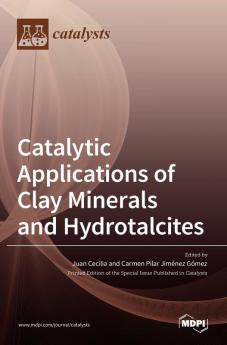
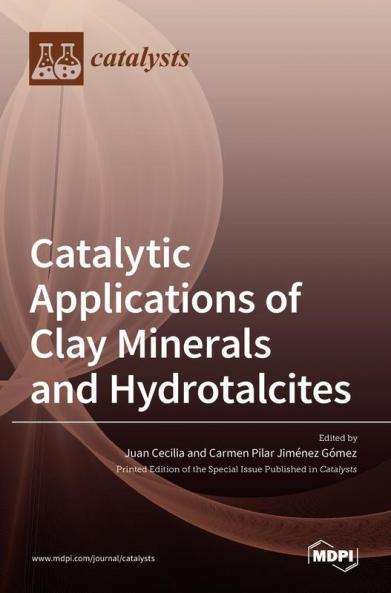
<p>Clay minerals are inexpensive and available materials with a wide range of applications (adsorbent ion exchanger support catalyst paper coating ceramic and pharmaceutical applications among others). Clay minerals can be easily modified through acid/basic treatments the insertion of bulky ions or pillars into the interlayer spacing and acid treatment improving their physicochemical properties.</p><p>Considering their low cost and high availability clay minerals display a relatively high specific surface area in such a way that they have a great potential to be used as catalytic supports since they can disperse expensive active phases as noble metals on the porous structures of their surfaces. In addition the low cost of these supports allows their implementation on an industrial scale more easily than other supports which are only feasible at the laboratory scale. Hydrotalcites (considered as anionic or basic clays) are also inexpensive materials with a great potential to be used as catalysts since their textural properties could also be modified easily through the insertion of anions in their interlayer spacing. In the same way these hydrotalcites formed by layered double hydroxides can lead to their respective mixed oxides after thermal treatment. These mixed oxides are considered basic catalysts with a high surface area so they can also be used as catalytic support.</p><p>&nbsp;</p><p>&nbsp;</p>

Piracy-free

Assured Quality

Secure Transactions

Fast Delivery

Sustainably Printed
Details
ISBN 13
9783036535524
Publication Date
-06-04-2022
Pages
-108
Weight
-293 grams
Dimensions
-170x244x11.11 mm
