

English


₹5247
(All inclusive*)
Paperback
Delivery Options
Please enter pincode to check delivery time.
*COD & Shipping Charges may apply on certain items.
Review final details at checkout.
Looking to place a bulk order? SUBMIT DETAILS
Delivery Options
Please enter pincode to check delivery time.
*COD & Shipping Charges may apply on certain items.
Review final details at checkout.
About The Book
Description
Author
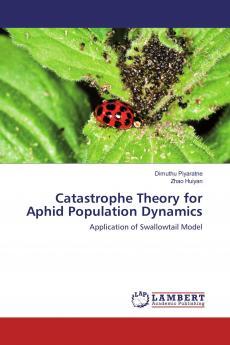
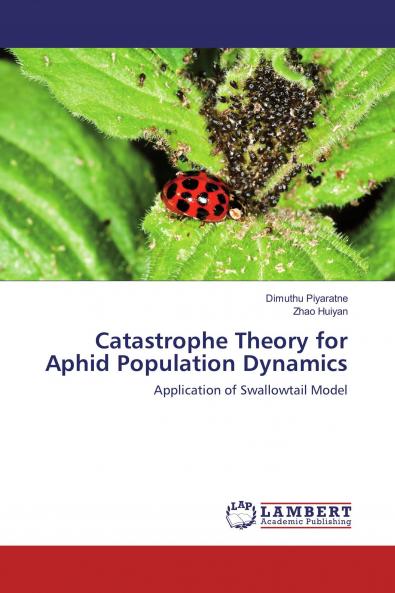
Aphids seriously damage wheat by feeding on the different parts of the crop and by transporting some disease causative agents. Although there are several traditional controlling methods the current trend is focused on biological controlling and pest forecasting as it is eco-friendly sustainable measure. For this a good understanding of their population dynamics which is been impacted by intrinsic or extrinsic factors is critically important. Population dynamics of wheat aphid frequently show catastrophic movements and difficult to predict the changes. However this can be best handled using catastrophe theory. Identifying catastrophe regions and boundaries of population dynamics can be used to forecast outbreaks or attacks which are economically important. This book explains how catastrophe theory is used to analyze aphid population dynamics and identify catastrophic regions and boundaries based on Swallowtail Catastrophe Model. Model development and application with actual data collected from field trials are also presented. Further this book is more useful for students and other researchers who are engaged with catastrophe theory applications and population dynamics research.

Piracy-free

Assured Quality

Secure Transactions

Fast Delivery

Sustainably Printed
Details
ISBN 13
9783330018174
Publication Date
-23-12-2016
Pages
-120
Weight
-166 grams
Dimensions
-150x220x6.77 mm
