

by
GOPNIK
English



Hardback
₹4360
₹5590
22% OFF
(All inclusive*)
Delivery Options
Please enter pincode to check delivery time.
*COD & Shipping Charges may apply on certain items.
Review final details at checkout.
Looking to place a bulk order? SUBMIT DETAILS
Delivery Options
Please enter pincode to check delivery time.
*COD & Shipping Charges may apply on certain items.
Review final details at checkout.
About The Book
Description
Author
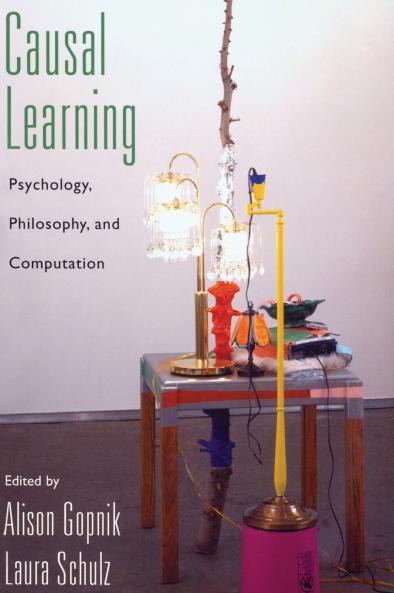
The world has a causal structure in the sense that some events make other events happen. Although understanding causal structure is essential for predicting and controlling the environment causal structure is at least usually not obvious from superficial perceptual cues. How then do our minds infer this structure? In the last few years questions about causal inference and learning have become an important focus of investigation in many different disciplines - developmental psychology cognitive psychology ethology philosophy and computer science. As is common in scientific research there has been relatively little interaction on the topic between these disciplines. However in spite of the minimal interaction a general review of the research shows the beginning of a formal way of determining how in principle the problem of causal inference and learning can be solved and a wealth of methods for determining how it is in fact solved by children adults and animals. This volume brings together this research and provides a more sophisticated understanding of causal inference and learning.

Piracy-free

Assured Quality

Secure Transactions

Fast Delivery

Sustainably Printed
Details
ISBN 13
9780195176803
Publication Date
-26-08-2010
Pages
-372
Weight
-768 grams
Dimensions
-178x254x22.23 mm
