


English



₹871
₹1090
20.09% OFF
(All inclusive*)
Paperback
Delivery Options
Please enter pincode to check delivery time.
*COD & Shipping Charges may apply on certain items.
Review final details at checkout.
Looking to place a bulk order? SUBMIT DETAILS
Delivery Options
Please enter pincode to check delivery time.
*COD & Shipping Charges may apply on certain items.
Review final details at checkout.
About The Book
Description
Author
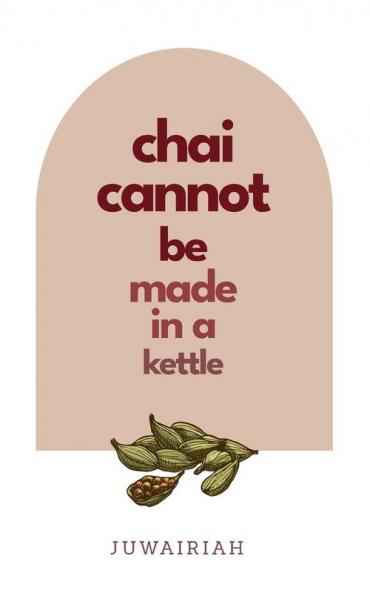
<p>In <em>chai cannot be made in a kettle</em> Juwairiah speaks of belonging straddling the gaps between cultures outlooks and worldviews and embracing the dissonance of her identity as a British Muslim Indian woman. Her verses explore the meaning of home as a multicultural and multilingual household. 'Some mornings/ I peep through the keyhole/ watch her and her father converse in Swahili./ I do not understand their language so instead/ I watch her tongue dance.'</p><p><br></p><p>She writes about her connection to her faith and community&nbsp;poignantly articulating the ways in which these are misunderstood marginalised and commodified in modern-day Britain and the verbal and cultural acrobatics involved in having an identity that bridges cultural and linguistic divides. 'We surrendered syllables so that we would fit in/ muted rhymes and rhythms so we weren't booted out.'</p><p><br></p><p>Scents and flavours evoke a lost heritage in many of the poems in <em>chai cannot be made in a kettle</em>. The rituals of community and faith create a background rhythm to Juwairiah's poems the ache of a wistful collective memory interacting with the everyday liminal realities of life as a British Indian woman: 'I heard whispers of brown sacred women/ who lay under darkness longing for their motherland./ A place where bodies bathe in sweet honey milk/ doused in ancient cardamom pods.'</p>

Piracy-free

Assured Quality

Secure Transactions

Fast Delivery

Sustainably Printed
Details
ISBN 13
9781739460105
Publication Date
-15-08-2023
Pages
-68
Weight
-79 grams
Dimensions
-127x203x4.69 mm
