

by
Anup Das
English


₹5152
(All inclusive*)
Paperback
Delivery Options
Please enter pincode to check delivery time.
*COD & Shipping Charges may apply on certain items.
Review final details at checkout.
Looking to place a bulk order? SUBMIT DETAILS
Delivery Options
Please enter pincode to check delivery time.
*COD & Shipping Charges may apply on certain items.
Review final details at checkout.
About The Book
Description
Author
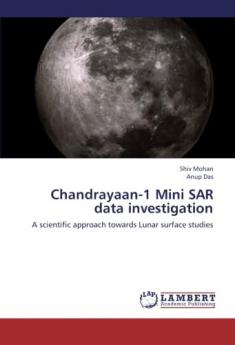
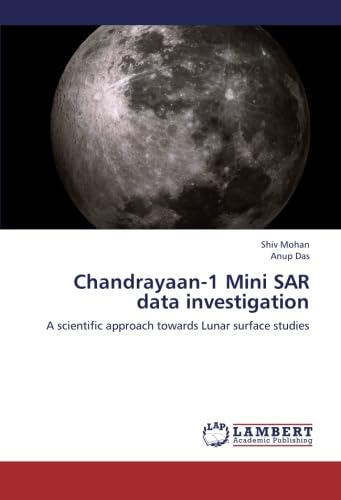
Mini-SAR imaging radar on-board Chandrayaan-1 of ISRO was the first lunar orbiting mono-static SAR flown in October 2008 with a primary scientific objective to detect water-ice in the permanently shadowed regions on the lunar poles up to a depth of a few meters. Derived its inspiration from Clementine bi-static radar experiment Mini-SAR was operated at S-band with LCP transmission and reception in linear horizontal (H) and vertical (V) polarizations. Analysis of microwave scattering characteristics over Lunar Polar Region through various polarimetric parameters and decomposition methods was the key factor in identifying craters associated with water ice deposits. Analysis methods and approach adopted towards such studies are discussed. Scattering characteristics and study of many targets covering equatorial region are also presented. In addition use of dual-frequency S- and L-band radar for improved detection of water-ice deposits in the lunar polar region is also discussed. Such a dual frequency SAR system is likely to be available in Chandrayaan-2 mission.

Piracy-free

Assured Quality

Secure Transactions

Fast Delivery

Sustainably Printed
Details
ISBN 13
9783659179686
Publication Date
-03-10-2012
Pages
-96
Weight
-136 grams
Dimensions
-150x220x5.53 mm
