

English


₹4195
(All inclusive*)
Paperback
Delivery Options
Please enter pincode to check delivery time.
*COD & Shipping Charges may apply on certain items.
Review final details at checkout.
Looking to place a bulk order? SUBMIT DETAILS
Delivery Options
Please enter pincode to check delivery time.
*COD & Shipping Charges may apply on certain items.
Review final details at checkout.
About The Book
Description
Author
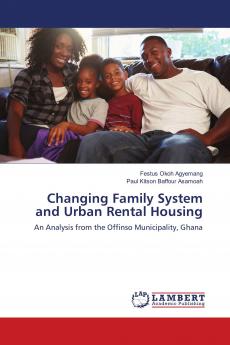
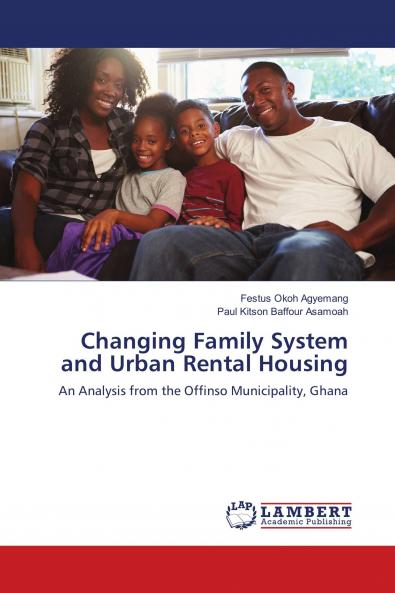
Family systems are changing most especially in third world countries. In Ghana the change is from the traditional extended family to the nuclear family system (Twumasi 1983). The traditional extended family system was mainly associated with the multi-habitation or compound house which provided affordable accommodation. In Ghana this house type provided rent-free accommodation for low income urban dwellers and presently serves as the major provider of rental accommodation in most urban areas of the country. With the changing family systems and the desire for personalised lifestyles there is a reduced development of multi-habitation houses (compound houses) with the shift towards the development of single family self-contained houses which do not provide room for renting (Addo 2013). This book presents an empirical analysis on how changes in family systems is affecting access to rental accommodation and should assist stakeholders in the housing sector to put up measures to meet the housing needs of the people in the light of the changes.

Piracy-free

Assured Quality

Secure Transactions

Fast Delivery

Sustainably Printed
Details
ISBN 13
9783659911880
Publication Date
-27-07-2018
Pages
-84
Weight
-121 grams
Dimensions
-150x220x4.92 mm
