

English


₹7560
(All inclusive*)
Paperback
Delivery Options
Please enter pincode to check delivery time.
*COD & Shipping Charges may apply on certain items.
Review final details at checkout.
Looking to place a bulk order? SUBMIT DETAILS
Delivery Options
Please enter pincode to check delivery time.
*COD & Shipping Charges may apply on certain items.
Review final details at checkout.
About The Book
Description
Author
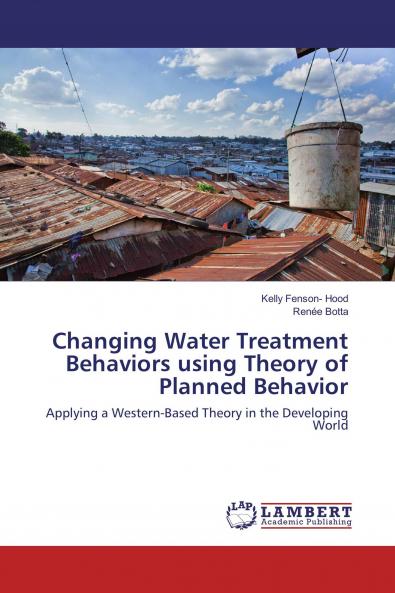
This research explored how a Western-developed behavior-change theoretical model could be applied in a developing country. Formative field research was collected in 2010 in Kibera Africa’s largest urban informal settlement located in Nairobi Kenya. Data was collected through focus groups a case study and direct observations. Recommendations were made for an intervention to reduce the incidence of childhood diarrhea. A campaign was proposed that promoted consistent and sustainable use of the Safe Water System that is point-of-use drinking water treatment and safe drinking water storage. Results revealed that it was indeed feasible to apply the Western model Theory of Planned Behavior as the campaign’s theoretical framework so long as key issues were addressed. First barriers had to be reduced to increase self-efficacy and enable positive attitudes towards point-of-use water treatment. Second normative behaviors and beliefs had to be assessed through a Kenyan cultural lens and adapted to fit within the context of the culture. This work supports existing research pertaining to the use of the Theory of Planned Behavior in the developing world.

Piracy-free

Assured Quality

Secure Transactions

Fast Delivery

Sustainably Printed
Details
ISBN 13
9783659485626
Publication Date
-11-04-2016
Pages
-188
Weight
-250 grams
Dimensions
-150x220x10.26 mm
