

by
Hui Wang
English



₹6183
₹6254
1.14% OFF
(All inclusive*)
Hardback
Delivery Options
Please enter pincode to check delivery time.
*COD & Shipping Charges may apply on certain items.
Review final details at checkout.
Looking to place a bulk order? SUBMIT DETAILS
Delivery Options
Please enter pincode to check delivery time.
*COD & Shipping Charges may apply on certain items.
Review final details at checkout.
About The Book
Description
Author(s)
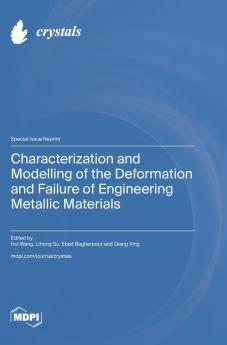
<p>Metals are the most widely used engineering materials and their reliability is crucial for their applications. Engineered metallic materials exhibit diverse mechanical properties defects phases microstructures and chemical compositions. These microstructural features govern the deformation and failure of metals. Recent advances in material characterization techniques have provided insights into deformation mechanisms across a wide range of length and time scales. At the microscale electron microscopy is widely used to reveal local crystal orientations and microstructures. At larger scales digital image correlation (DIC) techniques and X-ray diffraction have enabled the measurement of internal stresses and lattice strains during deformation. Emerging techniques such as 3D tomography atom probe tomography (APT) and a focused ion beam (FIB) allow for the three-dimensional reconstruction of microstructures.</p><p>Numerical modelling techniques have also progressed significantly. The finite element method (FEM) remains a cornerstone of mechanical simulation. Incorporating crystal plasticity models into FEM enables the consideration of microstructural features at the grain level. At a lower scale discrete dislocation dynamics (DDD) and molecular dynamics (MD) simulations capture the activities of dislocations.</p>

Piracy-free

Assured Quality

Secure Transactions

Fast Delivery

Sustainably Printed
Details
ISBN 13
9783725857111
Publication Date
-19-11-2025
Pages
-146
Weight
-352 grams
Dimensions
-170x244x14.29 mm
