


English




Hardback
₹4872
(All inclusive*)
Delivery Options
Please enter pincode to check delivery time.
*COD & Shipping Charges may apply on certain items.
Review final details at checkout.
Looking to place a bulk order? SUBMIT DETAILS

Piracy-free

Assured Quality

Secure Transactions
About The Book
Description
Author
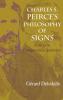
<p>[Note: Picture of Peirce available]<br /><br />Charles S. Peirce's Philosophy of Signs<br />Essays in Comparative Semiotics<br />Gérard Deledalle<br /><br />Peirce's semiotics and metaphysics compared to the thought of other leading philosophers. <br /><br />This is essential reading for anyone who wants to find common ground between the best of American semiotics and better-known European theories. Deledalle has done more than anyone else to introduce Peirce to European audiences and now he sends Peirce home with some new flare.--Nathan Houser Director Peirce Edition Project<br /><br />Charles S. Peirce's Philosophy of Signs examines Peirce's philosophy and semiotic thought from a European perspective comparing the American's unique views with a wide variety of work by thinkers from the ancients to moderns. Parts I and II deal with the philosophical paradigms which are at the root of Peirce's new theory of signs pragmatic and social. The main concepts analyzed are those of sign and semiosis and their respective trichotomies; formally in the case of sign in time in the case of semiosis. Part III is devoted to comparing Peirce's theory of semiotics as a form of logic to the work of other philosophers including Bertrand Russell Wittgenstein Frege Philodemus Lady Welby Saussure Morris Jakobson and Marshall McLuhan. Part IV compares Peirce's scientific metaphysics with European metaphysics.<br /><br />Gérard Deledalle holds the Doctorate in Philosophy from the Sorbonne. A research scholar at Columbia University and Attaché at the Centre National de la Recherche Scientifique Paris he has also been Professor of Philosophy and Head of the Philosophy Department of the universities of Tunis Perpignan and Libreville. In 1990 he received the Herbert W. Schneider Award for distinguished contributions to the understanding and development of American philosophy. In 2001 he was appointed vice-president of the Charles S. Peirce Society.<br /><br />Contents<br /><br />Introduction--Peirce Compared: Directions for Use<br /><br />Part I--Semeiotic as Philosophy<br />Peirce's New Philosophical Paradigms<br />Peirce's Philosophy of Semeiotic<br />Peirce's First Pragmatic Papers (1877-1878)<br />The Postscriptum of 1893<br /><br />Part II--Semeiotic as Semiotics<br />Sign: Semiosis and Representamen--Semiosis and Time<br />Sign: The Concept and Its Use--Reading as Translation<br /><br />Part III--Comparative Semiotics<br />Semiotics and Logic: A Reply to Jerzy Pelc<br />Semeiotic and Greek Logic: Peirce and Philodemus<br />Semeiotic and Significs: Peirce and Lady Welby<br />Semeiotic and Semiology: Peirce and Saussure<br />Semeiotic and Semiotics: Peirce and Morris<br />Semeiotic and Linguistics: Peirce and Jakobson<br />Semeiotic and Communication: Peirce and McLuhan<br />Semeiotic and Epistemology: Peirce Frege and Wittgenstein<br /><br />Part IV--Comparative Metaphysics<br />Gnoseology--Perceiving and Knowing: Peirce Wittgenstein and Gestalttheorie<br />Ontology--Transcendentals of or without Being: Peirce versus Aristotle and Thomas Aquinas<br />Cosmology--Chaos and Chance within Order and Continuity: Peirce between Plato and Darwin<br />Theology--The Reality of God: Peirce's Triune God and the Church's Trinity<br />Conclusion--Peirce: A Lateral View</p>
Piracy-free
Assured Quality
Secure Transactions
Delivery Options
Please enter pincode to check delivery time.
*COD & Shipping Charges may apply on certain items.
Review final details at checkout.
Details
ISBN 13
9780253337368
Publication Date
-01-03-2001
Pages
-214
Weight
-403 grams
Dimensions
-156x234x12.7 mm
