




This Book is Out of Stock!
English



Hardback
₹5472
₹6375
14.16% OFF
(All inclusive*)
Delivery Options
*COD & Shipping Charges may apply on certain items.
Review final details at checkout.
Looking to place a bulk order? SUBMIT DETAILS

Piracy-free

Assured Quality

Secure Transactions
About The Book
Description
Author
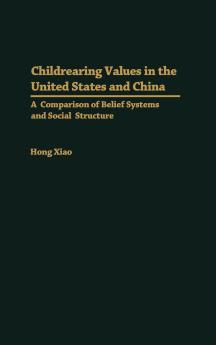
Hong Xiao examines the linkage between social structure and child-rearing values in the United States and China. Her primary objectives are to examine the underlying structure of childrearing values discover the dynamics of the structural-level family-level and individual-level determinants of childrearing values and to compare patterns of value orientations in the two countries.Three value dimensions--autonomy conformity and a care orientation--are identified in both the United States and China samples via factor analyses. Furthermore despite cross-national differences in political system economic development and culture history Professor Xiao finds Americans and Chinese are quite similar in their thinking of the kinds of things to teach children at home. Among the top six qualities endorsed within each country five are identical. However sources of value variations are drastically different in the two countries. For example in the United States while the influence of class on men''s values for children has become muted overtime class differences in values continue to exist among women. And neither gender nor motherhood is related to the care orientation. In China valuation of children''s autonomy or conformity is conditioned heavily by political conformity age and family size. Of particular interest to scholars students and other researchers involved with gender and family studies sociology and Asian Studies.
Piracy-free
Assured Quality
Secure Transactions
*COD & Shipping Charges may apply on certain items.
Review final details at checkout.
₹5472
₹6375
14% OFF
Hardback
Out Of Stock
All inclusive*
Details
ISBN 13
9780275973131
Publication Date
-30-07-2001
Pages
-178
Weight
-338 grams
Dimensions
-152x229x14.29 mm
