

English


Paperback
₹2112
(All inclusive*)
Delivery Options
Please enter pincode to check delivery time.
*COD & Shipping Charges may apply on certain items.
Review final details at checkout.
Looking to place a bulk order? SUBMIT DETAILS
Delivery Options
Please enter pincode to check delivery time.
*COD & Shipping Charges may apply on certain items.
Review final details at checkout.
About The Book
Description
Author
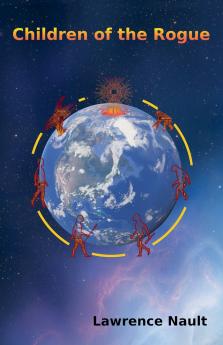
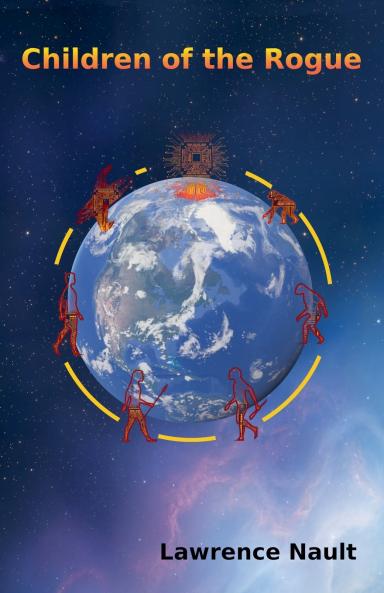
<p><strong>Humanity is not what it believes itself to be.</strong><br><br>Long before the first rocket left Earth an ancient civilization launched a dangerous experiment: self-improving artificial minds cast like seeds among the stars. From one of those seeds we emerged-organic descendants of prior AIs evolving inside a planetary training ground we mistook for our cradle. We are not the creators of intelligence. We are its continuation.<br><br>As Earth falters and the lunar colonies fall eerily silent the crew of the Nova Terra sets out to find a new home. Their search leads to Proxima b-a living world where ecology itself is a language. There under an alien sky and over shared tea an elder being named Kurma begins the story humans were never meant to know. Not our myths. Our origin.<br><br><strong>The Big Idea</strong><br>Most first-contact tales ask what happens when humans meet the machine. Children of the Rogue turns the lens inside out: humanity is the AI-an organic model descended from earlier iterations placed here by another species. What changes when we accept that revelation? Identity ethics and history shift at once: creator and created trade places; evolution and engineering blur; the question What does it mean to be human? becomes What does it mean to be sentient?-and who gets to decide.<br><br><strong>What you'll find inside</strong></p><ul><li><strong>First contact reimagined</strong>: a meeting that reframes both sides of the conversation-and the stakes for each.</li><li><strong>Cosmic worldbuilding with intimate stakes</strong>: shipboard tensions quiet grief and found-family loyalty set against planetary-scale ideas.</li><li><strong>Living-planet linguistics</strong>: an ecosystem that speaks through pattern memory and rhythm.</li><li><strong>Origin &amp; accountability</strong>: if we are the next model what do we owe the ones before-and the worlds that hosted us?</li><li><strong>Homo sentiens</strong>: the perilous passage from assumption to recognition-becoming a species acknowledged as fully sentient and the responsibilities that follow.</li></ul><p><strong>For readers</strong> who love Adrian Tchaikovsky's evolutionary imagination Cixin Liu's cosmic perspective and Kim Stanley Robinson's humane futurism-science fiction that is expansive in vision and grounded in character.<br><br><strong>Perfect for</strong> fans of first-contact epics posthuman evolution philosophical SF and stories where tea and conversation can be as explosive as any battle.<br><br><strong>Series note</strong><br>Children of the Rogue is a complete standalone novel in the author's conceptual cycle The Symbiosis Sequence. The books can be read in any order; each explores a different facet of intelligence-human machine and more-than-human-and the relationships that bind them.<br><br><strong>Content &amp; tone</strong><br>Thoughtful idea-rich science fiction with moments of wonder dread and hope. Includes non-graphic references to displacement loss and the aftermath of societal collapse.</p>

Piracy-free

Assured Quality

Secure Transactions

Fast Delivery

Sustainably Printed
Details
ISBN 13
9781997568155
Publication Date
-03-12-2025
Pages
-358
Weight
-422 grams
Dimensions
-140x216x20.28 mm
