

Chinese


Paperback
₹5540
₹6689
17.18% OFF
(All inclusive*)
Delivery Options
Please enter pincode to check delivery time.
*COD & Shipping Charges may apply on certain items.
Review final details at checkout.
Looking to place a bulk order? SUBMIT DETAILS
Delivery Options
Please enter pincode to check delivery time.
*COD & Shipping Charges may apply on certain items.
Review final details at checkout.
About The Book
Description
Author
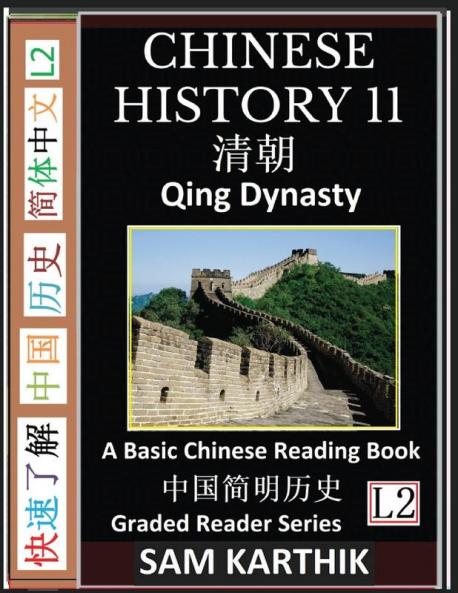
<p><span style=color: rgba(44 41 59 1)>The </span><strong style=color: rgba(44 41 59 1)>Qing Dynasty</strong><span style=color: rgba(44 41 59 1)> (清朝 1636-1912) was the last feudal dynasty in </span><strong style=color: rgba(44 41 59 1)>Chinese history</strong><span style=color: rgba(44 41 59 1)>. The </span><strong style=color: rgba(44 41 59 1)>Manchurian </strong><span style=color: rgba(44 41 59 1)>dynasty with 12 emperors ruled </span><strong style=color: rgba(44 41 59 1)>China </strong><span style=color: rgba(44 41 59 1)>for about 276 years. The Manchus maintained the capital at </span><strong style=color: rgba(44 41 59 1)>Beijing </strong><span style=color: rgba(44 41 59 1)>(Romanized as </span><strong style=color: rgba(44 41 59 1)>Peking</strong><span style=color: rgba(44 41 59 1)>). During the early years of Qing Dynasty China's traditional society achieved unprecedented development achievements. The Kangxi Emperor (康熙) the longest reigning of any Chinese emperor ushered in what historians call the </span><strong style=color: rgba(44 41 59 1)>Great Qing </strong><span style=color: rgba(44 41 59 1)>(大清). However due to multiple conflicts such as the </span><strong style=color: rgba(44 41 59 1)>First Opium War</strong><span style=color: rgba(44 41 59 1)> the </span><strong style=color: rgba(44 41 59 1)>Second Opium War</strong><span style=color: rgba(44 41 59 1)> the Taiping Rebellion etc. the dynasty finally collapsed in 1911.</span></p><p>&nbsp;</p><p><span style=color: rgba(44 41 59 1)>The book </span><strong style=color: rgba(44 41 59 1)>Chinese History 11</strong><span style=color: rgba(44 41 59 1)> a Chinese reading practice book presents a broad and simple overview of China's Qing Dynasty the dynasty that succeeded the Ming Dynasty (1368-1644). The Qing Dynasty was the last imperial dynasty in the Chinese history as the dynasty was itself succeeded by the Republic of China. The new volume part of the Mandarin Chinese Reading Series includes both the Chinese text (simplified characters) and pinyin. With about 900 unique Chinese characters the volume would be suitable for the beginners lower intermediate and advanced level Chinese language learners (HSK 1-6). Overall the Mandarin Chinese Reading Series offers you a variety of elementary level books (Level 1/2/3) to learn Chinese culture as well as practice Chinese reading fast.</span></p><p><br></p><p><span style=color: rgba(44 41 59 1)>The book has 10 chapters in the following order:</span></p><p><span style=color: rgba(44 41 59 1)> Chapter 1: Introduction to the Qing Dynasty (第一章: 清代简介)</span></p><p><span style=color: rgba(44 41 59 1)> Chapter 2: The Fall of the Ming Dynasty (第二章:明朝的灭亡)</span></p><p><span style=color: rgba(44 41 59 1)> Chapter 3: Emperor Kangxi (第三章:康熙皇帝)</span></p><p><span style=color: rgba(44 41 59 1)> Chapter 4: Qing Politics (第四章:清朝政治)</span></p><p><span style=color: rgba(44 41 59 1)> Chapter 5: Emperor Qianlong (第五章:乾隆皇帝)</span></p><p><span style=color: rgba(44 41 59 1)> Chapter 6: Culture and Art of the Qing Dynasty (第六章:清代文化艺术)</span></p><p><span style=color: rgba(44 41 59 1)> Chapter 7: The Opium Wars (第七章:鸦片战争)</span></p><p><span style=color: rgba(44 41 59 1)> Chapter 8: Empress Dowager Cixi (第八章: 慈禧太后)</span></p><p><span style=color: rgba(44 41 59 1)> Chapter 9: The Rebellions (第九章:叛逆)</span></p><p><span style=color: rgba(44 41 59 1)> Chapter 10: The Fall of the Qing Dynasty (第十章:清朝灭亡)</span></p>

Piracy-free

Assured Quality

Secure Transactions

Fast Delivery

Sustainably Printed
Details
ISBN 13
9798887340593
Publication Date
-26-11-2022
Pages
-50
Weight
-144 grams
Dimensions
-216x280x2.63 mm
