

English


Paperback
₹4279
₹5610
23.73% OFF
(All inclusive*)
Delivery Options
Please enter pincode to check delivery time.
*COD & Shipping Charges may apply on certain items.
Review final details at checkout.
Looking to place a bulk order? SUBMIT DETAILS
Delivery Options
Please enter pincode to check delivery time.
*COD & Shipping Charges may apply on certain items.
Review final details at checkout.
About The Book
Description
Author
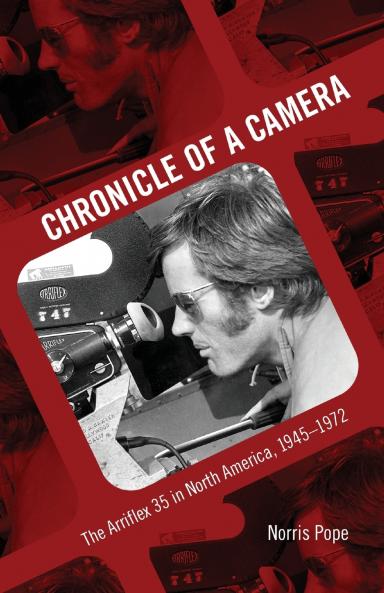
<p><strong>&quot;<em>Chronicle of a Camera</em> should be essential reading for anyone interested in how independent narrative cinema became a reality in the United States.&quot;</strong></p><p><strong>--Charles V. Eidsvik author of <em>Cineliteracy: Film Among the Arts</em></strong></p><p>This volume provides a history of the most consequential 35mm motion picture camera introduced in North America in the quarter century following the Second World War: the Arriflex 35. It traces the North American history of this camera from 1945 through 1972--when the first lightweight self-blimped 35mm cameras became available.</p><p><em>Chronicle of a Camera</em> emphasizes theatrical film production documenting the Arriflex&#39;s increasingly important role in expanding the range of production choices styles and even content of American motion pictures in this period. The book&#39;s exploration culminates most strikingly in examples found in feature films dating from the 1960s and early 1970s including a number of films associated with what came to be known as the &quot;Hollywood New Wave.&quot; The author shows that the Arriflex prompted important innovation in three key areas: it greatly facilitated and encouraged location shooting; it gave cinematographers new options for intensifying visual style and content; and it stimulated low-budget and independent production. Films in which the Arriflex played an absolutely central role include <em>Bullitt</em> <em>The French Connection</em> and most significantly <em>Easy Rider</em>. Using an Arriflex for car-mounted shots hand-held shots and zoom-lens shots led to greater cinematic realism and personal expression.</p>

Piracy-free

Assured Quality

Secure Transactions

Fast Delivery

Sustainably Printed
Details
ISBN 13
9781496814685
Publication Date
-01-01-2018
Pages
-204
Weight
-247 grams
Dimensions
-140x216x11.86 mm
