


English


Paperback
₹3211
₹3233
0.68% OFF
(All inclusive*)
Delivery Options
Please enter pincode to check delivery time.
*COD & Shipping Charges may apply on certain items.
Review final details at checkout.
Looking to place a bulk order? SUBMIT DETAILS

Piracy-free

Assured Quality

Secure Transactions
About The Book
Description
Author
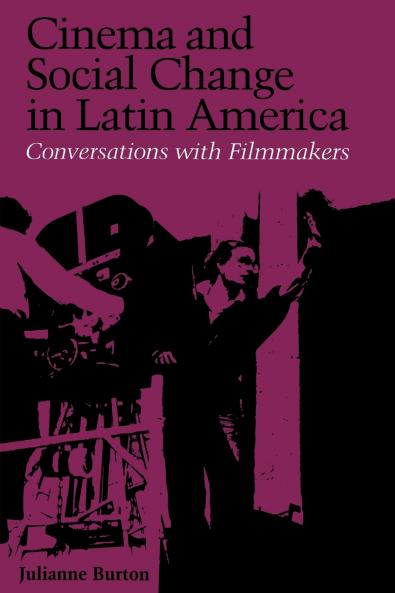
Since the late 1960s films from Latin America have won widening audiences in North America and Europe. Until now no single book has offered an introduction to the diverse personalities and practices that make up this important regional film movement.In Cinema and Social Change in Latin America Julianne Burton presents twenty interviews with key figures of Latin American cinema covering three decades and ranging from Argentina to Mexico. Interviews with pioneers Fernando Birri Nelson Pereira dos Santos and Glauber Rocha renowned feature filmmakers Toms Gutirrez Alea and Carlos Diegues prize-winning documentarists Patricio Guzmn and Helena Solberg-Ladd among others endeavor to balance personal achievement against the backdrop of historical political social and economic circumstances that have influenced each director''s career. Presented also are conversations that cast light on the related activities of acting distribution theory criticism and film-based community organizing.More than their counterparts in other regions of the world Latin American artists and intellectuals acknowledge the degree to which culture is shaped by history and politics. Since the mid-1950s a period of rising nationalism and regional consciousness talented young artists and activists have sought to redefine the uses of the film medium in the Latin American context. Questioning the studio and star systems of the Hollywood industrial model these innovators have developed new forms content and processes of production distribution and reception.The specific approaches and priorities of the New Latin American Cinema are far from monolithic. They vary from realism to expressionism from observational documentary to elaborate fictional constructs from imperfect cinema to a cinema that emulates the high production values of the developed sectors from self-reflexive to transparent cinematic styles from highly industrialized modes of production to purely artisanal ones. What does not vary is the commitment to film as a vehicle for social transformation and the expression of national and regional cultural autonomy.From early alternative cinema efforts in Argentina Brazil and Cuba to a contemporary perspective from within the Mexican commercial industry to the emerging cinema and video production from Central America Cinema and Social Change in Latin America offers the most comprehensive look at Latin American film available today.
Piracy-free
Assured Quality
Secure Transactions
Delivery Options
Please enter pincode to check delivery time.
*COD & Shipping Charges may apply on certain items.
Review final details at checkout.
Details
ISBN 13
9780292724549
Publication Date
-01-01-1986
Pages
-324
Weight
-441 grams
Dimensions
-152x229x18.42 mm
