


English



Hardback
₹11035
(All inclusive*)
Delivery Options
Please enter pincode to check delivery time.
*COD & Shipping Charges may apply on certain items.
Review final details at checkout.
Looking to place a bulk order? SUBMIT DETAILS

Piracy-free

Assured Quality

Secure Transactions
About The Book
Description
Author
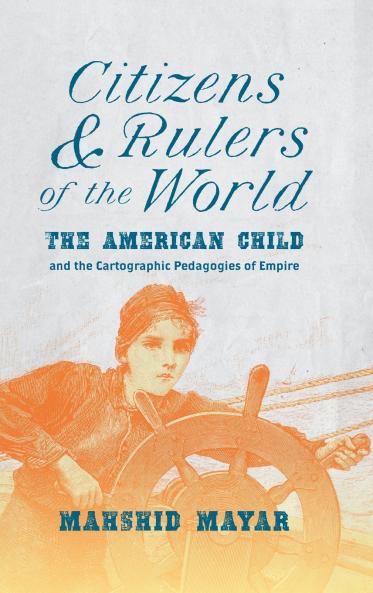
By delving&#xA0;into the complex cross-generational exchanges that characterize any&#xA0;political project as rampant as empire this&#xA0;thought-provoking study focuses&#xA0;on&#xA0;children&#xA0;and their ambivalent intimate relationships with maps&#xA0;and&#xA0;practices&#xA0;of mapping&#xA0;at the dawn of the &#x201C;American Century.&#x201D;&#xA0;Considering children as students map and puzzle makers letter writers and playmates Mahshid Mayar interrogates the ways turn-of-the-century American children encountered made sense of and produced spatial narratives and cognitive maps of the United States and the world.&#xA0;Mayar further probes&#xA0;how children&#x2019;s diverse patterns of consuming relating to and&#xA0;appropriating&#xA0;the &#x201C;truths&#x201D; that maps represent turned cartography into a site of&#xA0;personal and&#xA0;political&#xA0;contention.<br/><br/>To investigate where in the world the United States imagined itself at the end of the nineteenth century&#xA0;this book calls for new modes of mapping the United States&#xA0;as it studies the nation&#xA0;on regional hemispheric and global scales.&#xA0;By examining the multilayered liaison between imperial pedagogy and geopolitical literacy across a wide range of archival evidence Mayar delivers a careful microhistorical study of U.S. empire.
Piracy-free
Assured Quality
Secure Transactions
Delivery Options
Please enter pincode to check delivery time.
*COD & Shipping Charges may apply on certain items.
Review final details at checkout.
Details
ISBN 13
9781469667270
Publication Date
-29-03-2022
Pages
-256
Weight
-461 grams
Dimensions
-156x234x19.05 mm
