



Paperback
₹339
₹399
15.04% OFF
(All inclusive*)
Delivery Options
Please enter pincode to check delivery time.
*COD & Shipping Charges may apply on certain items.
Review final details at checkout.
Looking to place a bulk order? SUBMIT DETAILS
Delivery Options
Please enter pincode to check delivery time.
*COD & Shipping Charges may apply on certain items.
Review final details at checkout.
About The Book
Description
Author
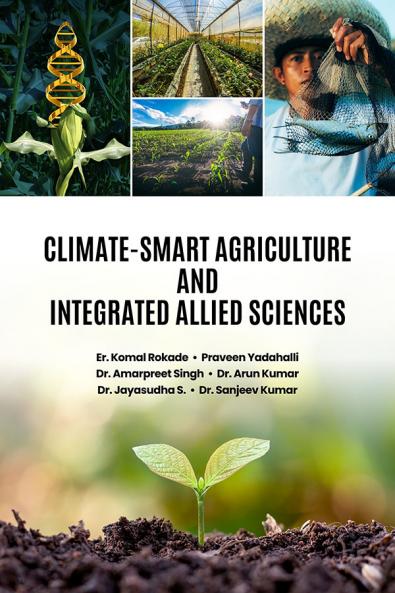
The twenty-first century has brought agriculture to the forefront of some of the most pressing global challenges: climate change food security resource scarcity and sustainability. Traditional farming systems while productive are increasingly vulnerable to erratic weather patterns prolonged droughts floods heat waves and emerging pest and disease outbreaks. As the agricultural sector struggles to adapt the concept of climate-smart agriculture (CSA) has emerged as a guiding framework that integrates productivity resilience and environmental stewardship.Climate-smart agriculture is more than a set of practices—it is a holistic approach that combines innovative technologies adaptive management and science-based solutions to achieve three interconnected goals: sustainably increasing agricultural productivity and incomes; building resilience and adaptive capacity to climate variability; and reducing or removing greenhouse gas emissions where possible. In this context allied sciences such as horticulture animal husbandry aquaculture soil science forestry and agricultural engineering play indispensable roles. Together these disciplines foster a systems-based perspective that is critical for addressing the multifaceted challenges of modern agriculture.This edited volume Climate-Smart Agriculture and Integrated Allied Sciences brings together research case studies and practical insights from experts across diverse domains. It highlights the importance of integrating climate-resilient crop production systems with allied sectors to ensure food nutritional and livelihood security. The book explores innovations such as climate-resilient varieties precision farming water-saving irrigation methods integrated pest and nutrient management renewable energy in agriculture carbon sequestration and digital tools that empower farmers with real-time decision-making.

Piracy-free

Assured Quality

Secure Transactions

Fast Delivery

Sustainably Printed
Details
ISBN 13
9789349921306
Publication Date
-23-08-2025
Pages
-326
Weight
-444 grams
Dimensions
-152.4x228.6x18.08 mm
