




English




Paperback
₹4108
₹5095
19.37% OFF
(All inclusive*)
Delivery Options
Please enter pincode to check delivery time.
*COD & Shipping Charges may apply on certain items.
Review final details at checkout.
Looking to place a bulk order? SUBMIT DETAILS

Piracy-free

Assured Quality

Secure Transactions
About The Book
Description
Author
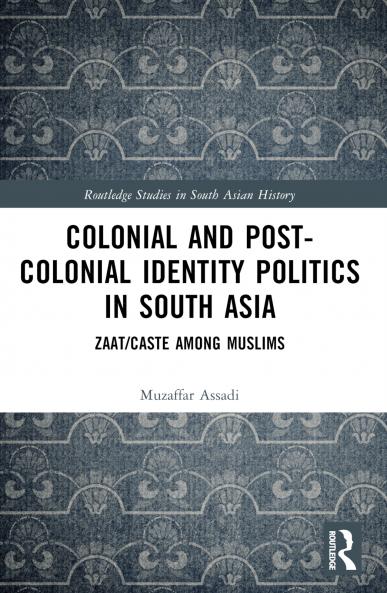
<p><em>Colonial and Post-Colonial Identity Politics in South Asia </em>analyses the colonial and post-colonial documentation and caste classification among Muslims in India demonstrating that religion negotiated with regional social customs and local social practices while at the same time fostering a shared religious belief.</p><p>The central question addressed in this book is how different castes assert their identity for classification and how castes encountered colonial documentation. Identifying the colonial context of the documentation of castes among Muslims and relying on colonial documentation in various census reports gazetteers government or police records ethnographic studies and travelogues the author demonstrates the sheer diversity of attempts and castes among Muslims. The book deconstructs how under Colonialism Muslims were categorised into three broad but overlapping categories – Ashraf Ajlafs and Arzals – and that Muslims were categorised into Asiatic Non-Asiatic Foreign Mixed and Hindustani – Muslim categories. It argues that few colonial theories applied to Muslims. Finally the author explores post-colonial documentation of castes among Muslims in various Commission reports particularly in Backward class commission reports and its interplay in the reservation politics of the contemporary period and examines the growth of various Muslim caste organisations in different parts of India and their role in identity politics.</p><p>Providing a new perspective on the issue of minorities in India this book will be of interest to scholars of religion Islam history politics and sociology of India.</p>
Piracy-free
Assured Quality
Secure Transactions
Delivery Options
Please enter pincode to check delivery time.
*COD & Shipping Charges may apply on certain items.
Review final details at checkout.
Details
ISBN 13
9781032606668
Publication Date
-06-05-2025
Pages
-262
Weight
-377 grams
Dimensions
-155.96x233.93x14.06 mm
