




This Book is Out of Stock!
English




Paperback
₹3496
₹3780
7.51% OFF
(All inclusive*)
Delivery Options
*COD & Shipping Charges may apply on certain items.
Review final details at checkout.
Looking to place a bulk order? SUBMIT DETAILS

Piracy-free

Assured Quality

Secure Transactions
About The Book
Description
Author
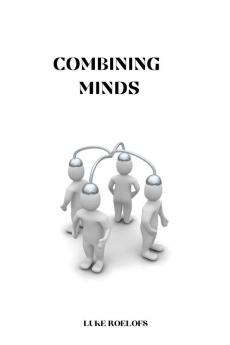
<p>This explores the possibility of composite consciousness: phenomenally conscious states</p><p>belonging to a composite being in virtue of the consciousness of and relations among its parts. We</p><p>have no trouble accepting that a composite being has physical properties entirely in virtue of the</p><p>physical properties of and relations among its parts. But a long-standing intuition holds that</p><p>consciousness is different: my consciousness cannot be understood as a complex of interacting</p><p>component consciousnesses belonging to parts of me. I ask why: what is it about consciousness that</p><p>makes us think it so different from matter? And should we accept this apparent difference?</p><p>'Combinationism' - the thesis that intelligibly constitutive composition is possible in the</p><p>experiential realm - bears on many debates in the metaphysics of mind. Constitutive panpsychism's</p><p>need for combinationism is at the centre of recent criticism of the theory but physicalists also need</p><p>an account of how the consciousness or lack thereof in two cerebral hemispheres and a whole brain</p><p>or a human being and their head or a social group and its individual members can be intelligibly</p><p>related. And further back in history the supposed simplicity of the soul was held to rule out any</p><p>form of materialism in a tradition of argument stretching from Plotinus to Brentano. With an eye to</p><p>this diversity of debates I examine the prospects for combinationists with a range of different</p><p>background views about the nature of consciousness the ontological status of the subject the</p><p>behaviour of the physical part-whole relation and the notions of constitution and explanation</p><p>themselves.</p>
Piracy-free
Assured Quality
Secure Transactions
*COD & Shipping Charges may apply on certain items.
Review final details at checkout.
₹3496
₹3780
7% OFF
Paperback
Out Of Stock
All inclusive*
Details
ISBN 13
9798869156426
Publication Date
-20-01-2024
Pages
-422
Weight
-569 grams
Dimensions
-152x229x21.86 mm
