

English


Paperback
₹5772
(All inclusive*)
Delivery Options
Please enter pincode to check delivery time.
*COD & Shipping Charges may apply on certain items.
Review final details at checkout.
Looking to place a bulk order? SUBMIT DETAILS
Delivery Options
Please enter pincode to check delivery time.
*COD & Shipping Charges may apply on certain items.
Review final details at checkout.
About The Book
Description
Author
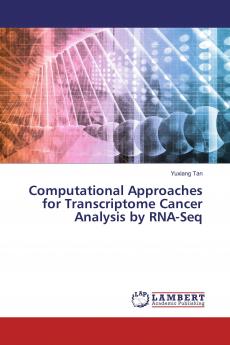
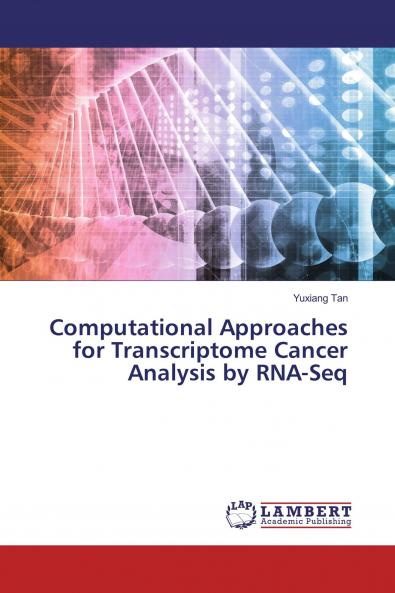
RNA-Seq provides an ideal platform to study the complete set of transcripts for a specific developmental stage or physiological condition. It reveals not only expression-level changes but also structural changes in the coding sequences including gene rearrangements. In this dissertation I present my contributions to the development of computational tools for the robust and efficient analysis of RNA-Seq data to support cancer research. To automate the laborious and computationally intensive procedure of RNA-Seq data management I worked on the development of Hydra an RNA-Seq pipeline for the parallel processing and quality control of large numbers of samples. I then present QueryFuse a novel gene-specific fusion-detection algorithm for aligned RNA-Seq data. It is designed to help biologists find and/or computationally validate fusions of interest quickly and to annotate the detected events with visualization and detailed properties of the supporting reads. Finally I contributed to the identification of a novel fusion event in lymphoma with potential therapeutic implications in clinical samples. I validated this fusion in silico and by experimental validation.

Piracy-free

Assured Quality

Secure Transactions

Fast Delivery

Sustainably Printed
Details
ISBN 13
9783659870873
Publication Date
-27-05-2016
Pages
-108
Weight
-151 grams
Dimensions
-150x220x6.15 mm
