


by
DYSON
English


Hardback
₹19947
(All inclusive*)
Delivery Options
Please enter pincode to check delivery time.
*COD & Shipping Charges may apply on certain items.
Review final details at checkout.
Looking to place a bulk order? SUBMIT DETAILS

Piracy-free

Assured Quality

Secure Transactions
About The Book
Description
Author
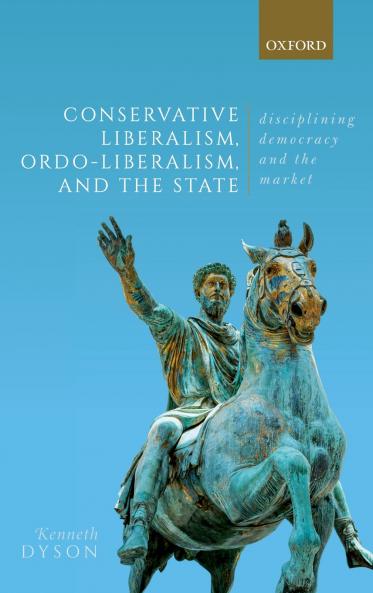
This book uses extensive original archival and elite interview research to examine the attempt to rejuvenate liberalism as a means of disciplining democracy and the market through a new rule-based economic and political order. This rebirth took the form of conservative liberalism and in its most developed form Ordo-liberalism. It occurred against the historical background of the great transformational crisis of liberalism in the first part of the twentieth century. Conservative liberalism evolved as a cross-national phenomenon. It included such eminent and cultured liberal economists as James Buchanan Frank Knight Henry Simons Ralph Hawtrey Jacques Rueff Luigi Einaudi Walter Eucken Friedrich Hayek Alfred Müller-Armack Wilhelm Röpke Alexander Rüstow and Paul van Zeeland as well as leading lawyers like Louis Brandeis Franz Böhm and Maurice Hauriou. Conservative liberals also played a formative role in establishing new international networks notably the Mont Pèlerin Society. The book investigates the rich intellectual inheritance of this variant of new liberalism from aristocratic liberalism ethical philosophy and religious thought. It also locates the social basis of conservative liberalism and Ordo-liberalism in the cultivated bourgeois intelligentsia. The book goes on to examine the attempts to embed this new disciplinary form of liberalism in Britain France Germany Italy and the United States and to consider the determinants of its varying significance across space and over time. It concludes by assessing the historical significance and contemporary relevance of conservative liberalism and Ordo-liberalism as liberalism confronts a new transformational crisis at the beginning of the new millennium. Is their promise of disciplining democracy and the market a hollow one?
Piracy-free
Assured Quality
Secure Transactions
Delivery Options
Please enter pincode to check delivery time.
*COD & Shipping Charges may apply on certain items.
Review final details at checkout.
Details
ISBN 13
9780198854289
Publication Date
-26-01-2021
Pages
-584
Weight
-911 grams
Dimensions
-156x234x31.75 mm
