


by
John Lok
English




Paperback
₹684
₹941
27.31% OFF
(All inclusive*)
Delivery Options
Please enter pincode to check delivery time.
*COD & Shipping Charges may apply on certain items.
Review final details at checkout.
Looking to place a bulk order? SUBMIT DETAILS
Delivery Options
Please enter pincode to check delivery time.
*COD & Shipping Charges may apply on certain items.
Review final details at checkout.
About The Book
Description
Author
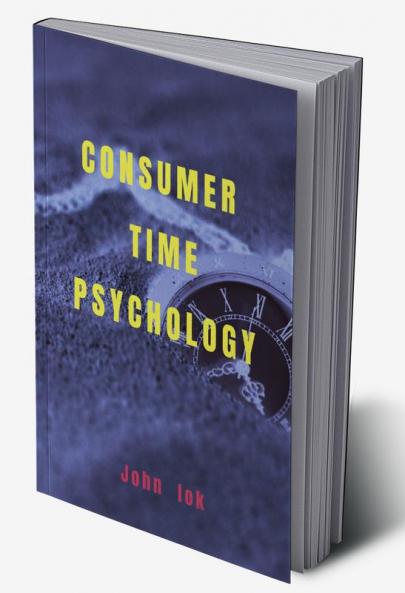
<p>The psychological framework surrounding time perception often involves the distinction between clock time and event time. In behavioral economics researchers have identified that the framing of a product-whether it is presented as a time-saver or a leisure-enhancer-significantly alters the consumer's willingness to pay.</p><p>My analysis suggests that when consumers are primed to think about time they become more focused on the experiential value of a purchase rather than its functional utility.This shift is supported by the temporal construal theory which posits that people think about distant events in abstract terms and near events in concrete terms.</p><p>Consequently when a purchase is framed as an investment in future time consumers are more likely to justify higher price points as they are effectively purchasing future freedom.</p>

Piracy-free

Assured Quality

Secure Transactions
Details
ISBN 13
9798885697538
Publication Date
-25-01-2022
Pages
-210
Weight
-292 grams
Dimensions
-152.4x228.6x11.86 mm
