

English


Paperback
₹1574
₹1595
1.32% OFF
(All inclusive*)
Delivery Options
Please enter pincode to check delivery time.
*COD & Shipping Charges may apply on certain items.
Review final details at checkout.
Looking to place a bulk order? SUBMIT DETAILS
Delivery Options
Please enter pincode to check delivery time.
*COD & Shipping Charges may apply on certain items.
Review final details at checkout.
About The Book
Description
Author
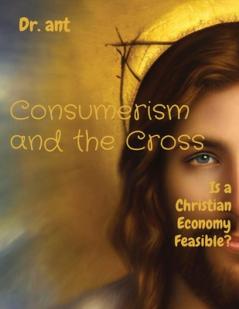
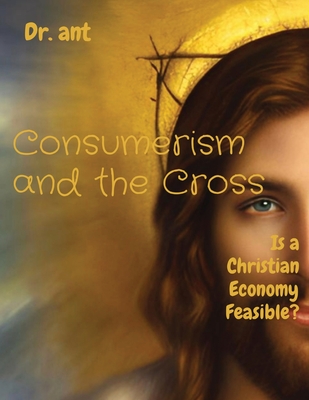
<p>Can we rely on Christianity to solve various problems arising from earthly existence?&nbsp;</p><p>Can we create a Christian economy? It seems that this is a contemporary utopia. Christianity&nbsp;</p><p>is mostly concerned with morality. We must strive for good. And the economy is a realm that&nbsp;</p><p>does not deserve special research on the part of theologians.</p><p>And yet Christianity takes a definite stand on some economic theories. It is strictly&nbsp;</p><p>opposed to socialism and communism to the attempt to deprive people of their land and&nbsp;</p><p>property. It does not take kindly to the state's attempt to control everything in a society.&nbsp;</p><p>Christianity argues in favor of more freedom for individual communities and especially&nbsp;</p><p>religious ones.</p><p>Private initiative and economic freedom are invariably linked to the idea of individual&nbsp;</p><p>freedom of religion. The state's attempt to intervene in the economy logically leads to&nbsp;</p><p>interference in the religious sphere. This interference should not be permitted.</p><p>On the other hand there is a temptation for the Church to commercialize itself. It can&nbsp;</p><p>attract more believers if it becomes more interesting. Holding a number of entertainment&nbsp;</p><p>events will indeed attract many people but they will be anything but believers. The way for the&nbsp;</p><p>Church to return more believers to its bosom is different - this will happen by giving strength&nbsp;</p><p>and support to the believers. In a complicated world full of global crises wars and acts of terror&nbsp;</p><p>the Church must be a pillar for all. It should give comfort hope faith and be our connection&nbsp;</p><p>with our Creator. A commercial or globalized Church will stand very far from the covenants of&nbsp;</p><p>Christ.</p>

Piracy-free

Assured Quality

Secure Transactions

Fast Delivery

Sustainably Printed
Details
ISBN 13
9781088171554
Publication Date
-25-11-2022
Pages
-152
Weight
-375 grams
Dimensions
-216x280x8.27 mm
