


English


Paperback
₹4400
₹4806
8.44% OFF
(All inclusive*)
Delivery Options
Please enter pincode to check delivery time.
*COD & Shipping Charges may apply on certain items.
Review final details at checkout.
Looking to place a bulk order? SUBMIT DETAILS

Piracy-free

Assured Quality

Secure Transactions
About The Book
Description
Author(s)
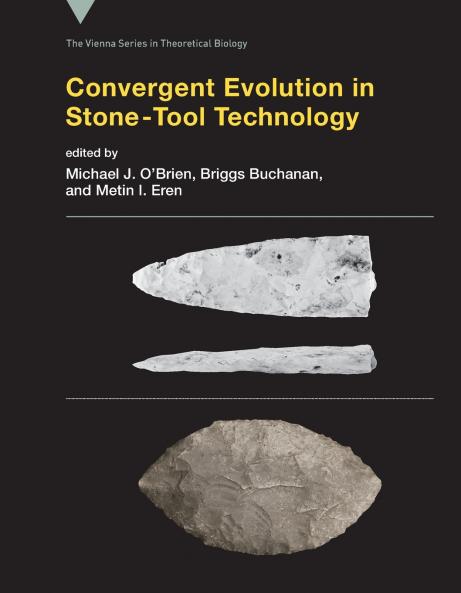
<b>Scholars from a variety of disciplines consider cases of convergence in lithic technology when functional or developmental constraints result in similar forms in independent lineages.</b> <p/>Hominins began using stone tools at least 2.6 million years ago perhaps even 3.4 million years ago. Given the nearly ubiquitous use of stone tools by humans and their ancestors the study of lithic technology offers an important line of inquiry into questions of evolution and behavior. This book examines convergence in stone tool-making cases in which functional or developmental constraints result in similar forms in independent lineages. Identifying examples of convergence and distinguishing convergence from divergence refutes hypotheses that suggest physical or cultural connection between far-flung prehistoric toolmakers. Employing phylogenetic analysis and stone-tool replication the contributors show that similarity of tools can be caused by such common constraints as the fracture properties of stone or adaptive challenges rather than such unlikely phenomena as migration of toolmakers over an Arctic ice shelf. <p/><b>Contributors</b> <br>R. Alexander Bentley Briggs Buchanan Marcelo Cardillo Mathieu Charbonneau Judith Charlin Chris Clarkson Loren G. Davis Metin I. Eren Peter Hiscock Thomas A. Jennings Steven L. Kuhn Daniel E. Lieberman George R. McGhee Alex Mackay Michael J. O'Brien Charlotte D. Pevny Ceri Shipton Ashley M. Smallwood Heather Smith Jayne Wilkins Samuel C. Willis Nicolas Zayns
Piracy-free
Assured Quality
Secure Transactions
Delivery Options
Please enter pincode to check delivery time.
*COD & Shipping Charges may apply on certain items.
Review final details at checkout.
Details
ISBN 13
9780262552080
Publication Date
-21-05-2024
Pages
-306
Weight
-488 grams
Dimensions
-178x229x16.28 mm
