


English


Paperback
₹5647
₹7441
24.11% OFF
(All inclusive*)
Delivery Options
Please enter pincode to check delivery time.
*COD & Shipping Charges may apply on certain items.
Review final details at checkout.
Looking to place a bulk order? SUBMIT DETAILS

Piracy-free

Assured Quality

Secure Transactions
About The Book
Description
Author(s)
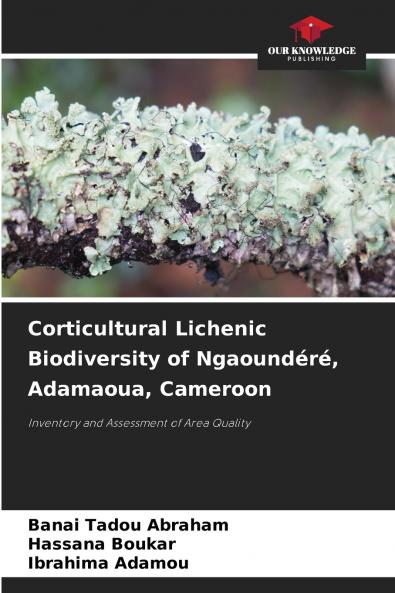
Lichens are composite organisms resulting from the association of a fungus and a single-celled alga. Highly sensitive to atmospheric pollution they are excellent bioindicators of air quality. This study combines an inventory of corticolous lichens with an assessment of air quality along three main roads in Ngaoundéré Cameroon. Twenty-five species in 15 genera and 9 families were recorded. Physconia detersa Permotrema austrosinense and Hypotrachya livida were the most abundant species with Physcia apolia the least abundant. Parmeliaceae is the most diverse family with 11 species and 5 genera. The foliaceous thallus is the most abundant and the fruticose thallus the least. The Wakwa station is the poorest in lichens and has the most polluted air while the Tchabal station is the richest in lichens and has the least polluted air. The pollution of the sites is due to human activities in particular road traffic which is very dense in this crossroads town. These initial results will help to safeguard the environment and the health of the local population.
Piracy-free
Assured Quality
Secure Transactions
Delivery Options
Please enter pincode to check delivery time.
*COD & Shipping Charges may apply on certain items.
Review final details at checkout.
Details
ISBN 13
9786207838028
Publication Date
-27-05-2025
Pages
-76
Weight
-116 grams
Dimensions
-152x229x4.62 mm
