



This Book is Out of Stock!
English


₹3309
(All inclusive*)
Paperback
Delivery Options
*COD & Shipping Charges may apply on certain items.
Review final details at checkout.
Looking to place a bulk order? SUBMIT DETAILS
*COD & Shipping Charges may apply on certain items.
Review final details at checkout.
₹3309
Out Of Stock
All inclusive*
About The Book
Description
Author
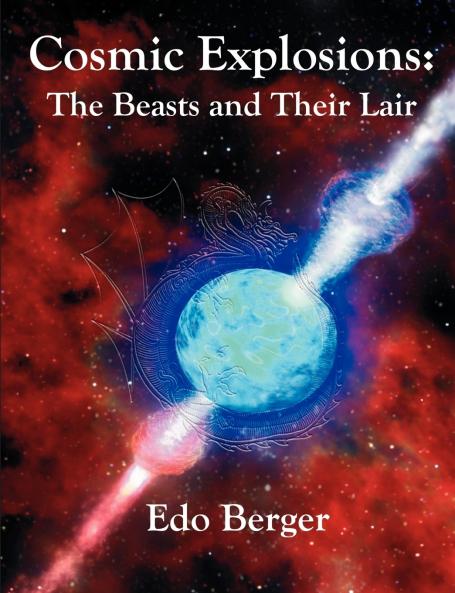
The diversity of stellar death is revealed in the energy velocity and geometry of the explosion debris (ejecta''). Using multi-wavelength observations of gamma-ray burst (GRB) afterglows I show that GRBs arising from the death of massive stars are marked by relativistic collimated ejecta (jets'') with a wide range of opening angles. These results suggest that various cosmic explosions are powered by a common energy source an engine'' (possibly an accreting stellar-mass black hole) with their diverse appearances determined solely by the variable high velocity output. On the other hand using radio observations I show that local type Ibc core-collapse supernovae generally lack relativistic ejecta and are therefore not powered by engines. Instead the highest velocity debris in these sources typically with a velocity lower than 100000 km/sec are produced in the (effectively) spherical ejection of the stellar envelope. The relative rates of engine- and collapse-powered explosions suggest that the former account for only a small fraction of the stellar death rate. Using the first radio and submillimeter observations of GRB hosts I show that some are extreme starburst galaxies with the bursts directly associated with the regions of most intense star formation. I suggest by comparison to other well-studied samples that GRBs preferentially occur in sub-luminous low mass galaxies undergoing the early stages of a starburst process. If confirmed with future observations this trend will place GRBs in the forefront of star formation and galaxy evolution studies.

Piracy-free

Assured Quality

Secure Transactions

Fast Delivery

Sustainably Printed
Details
ISBN 13
9781581122336
Publication Date
-01-07-2004
Pages
-200
Weight
-372 grams
Dimensions
-189x246x10.76 mm
