




English




Hardback
₹2083
₹2150
3.12% OFF
(All inclusive*)
Delivery Options
Please enter pincode to check delivery time.
*COD & Shipping Charges may apply on certain items.
Review final details at checkout.
Looking to place a bulk order? SUBMIT DETAILS
Delivery Options
Please enter pincode to check delivery time.
*COD & Shipping Charges may apply on certain items.
Review final details at checkout.
About The Book
Description
Author
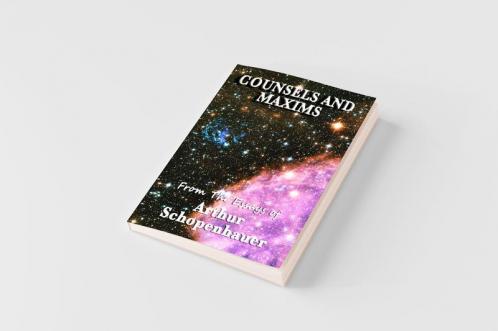
<p><strong>Arthur Schopenhauer's <em>Counsels and Maxims</em> is a sharp unsentimental classic of philosophical advice drawn from the practical side of one of the nineteenth century's most powerful and pessimistic minds.</strong> Originally published as part of <em>Aphorismen zur Lebensweisheit</em> in 1851 the work belongs to Schopenhauer's later collection <em>Parerga and Paralipomena</em> and offers a concentrated guide to conduct happiness self-command reputation solitude prudence and the limits of human expectation. Project Gutenberg identifies <em>Aphorismen zur Lebensweisheit</em> as published in 1851 as part of <em>Parerga and Paralipomena</em> while PhilPapers identifies <em>Counsels and Maxims</em> as the second part of that work in the T. Bailey Saunders translation. </p><p>Schopenhauer does not write as a cheerful moralist. His advice begins from the conviction that human life is difficult desire is dangerous vanity is universal and happiness is usually a matter of damage control rather than triumph. That hard clarity is exactly what gives the book its continuing force. Instead of offering optimism <em>Counsels and Maxims</em> teaches caution independence of mind discipline of speech careful judgement of others and the practical value of limiting one's dependence on public approval.</p><p>For readers of classic philosophy pessimism ethics aphoristic writing practical wisdom and nineteenth-century European thought <em>Counsels and Maxims</em> remains one of Schopenhauer's most accessible works. It is not a self-help book in the modern sense but something colder wiser and more durable: a philosophical manual for living in a world that does not owe anyone comfort.</p>

Piracy-free

Assured Quality

Secure Transactions
Details
ISBN 13
9781515434283
Publication Date
-03-04-2018
Pages
-88
Weight
-220 grams
Dimensions
-152x229x6.72 mm
