


English



Hardback
₹2636
₹2835
7.02% OFF
(All inclusive*)
Delivery Options
Please enter pincode to check delivery time.
*COD & Shipping Charges may apply on certain items.
Review final details at checkout.
Looking to place a bulk order? SUBMIT DETAILS

Piracy-free

Assured Quality

Secure Transactions
About The Book
Description
Author
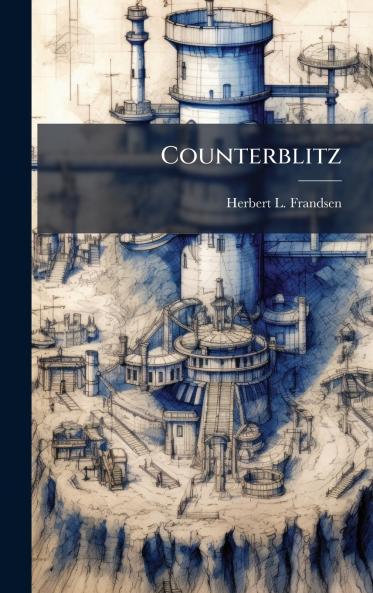
<p>The purpose of this monograph is to determine the conditions necessary for a successful counteroffensive. The study seeks to identify these conditions through historical analyses of four of the greatest counteroffensives of modern military history: Manstein's counterstroke at Kharkov (1943) the Battle of the Bulge (1944) MacArthur's Inchon Landing (1950) and the Israeli counteroffensive in the Sinai (1973). Elements of operational design which facilitate the analysis include the center of gravity lines of operation the culminating point and decisive points. Analysis of these great counteroffensives suggests six conditions necessary for a successful counteroffensive. First the defender should force the attacker's offensive to culminate before launching the counteroffensive. Second operational reserves must be constituted from forces previously used in the defense. Third air superiority needs to be established in the counteroffensive sector. Fourth the counteroffensive should seek to cut across the enemy's line of operation to deprive him of sustainment and block his retreat. Fifth use deception to confuse the enemy and agility to exploit his mistakes thus avoiding his strength and maneuvering into his rear to cut across his line of communication. Finally; a bold counteroffensive will be more decisive. Its execution requires a commander with determination to overcome not only the enemy but also political and organizational resistance on his own side. These insights can assist operational planners in applying sound judgment to the challenges of the future.</p><p>This work has been selected by scholars as being culturally important and is part of the knowledge base of civilization as we know it. This work was reproduced from the original artifact and remains as true to the original work as possible. Therefore you will see the original copyright references library stamps (as most of these works have been housed in our most important libraries around the world) and other notations in the work.</p><p>This work is in the public domain in the United States of America and possibly other nations. Within the United States you may freely copy and distribute this work as no entity (individual or corporate) has a copyright on the body of the work.</p><p>As a reproduction of a historical artifact this work may contain missing or blurred pages poor pictures errant marks etc. Scholars believe and we concur that this work is important enough to be preserved reproduced and made generally available to the public. We appreciate your support of the preservation process and thank you for being an important part of keeping this knowledge alive and relevant.</p><br>
Piracy-free
Assured Quality
Secure Transactions
Delivery Options
Please enter pincode to check delivery time.
*COD & Shipping Charges may apply on certain items.
Review final details at checkout.
Details
ISBN 13
9781025100753
Publication Date
-22-05-2025
Pages
-62
Weight
-195 grams
Dimensions
-156x234x6.35 mm
