





₹2314
₹3266
29.15% OFF
(All inclusive*)
Paperback
Delivery Options
Please enter pincode to check delivery time.
*COD & Shipping Charges may apply on certain items.
Review final details at checkout.
Looking to place a bulk order? SUBMIT DETAILS
Delivery Options
Please enter pincode to check delivery time.
*COD & Shipping Charges may apply on certain items.
Review final details at checkout.
About The Book
Description
Author
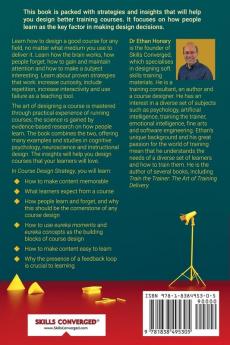
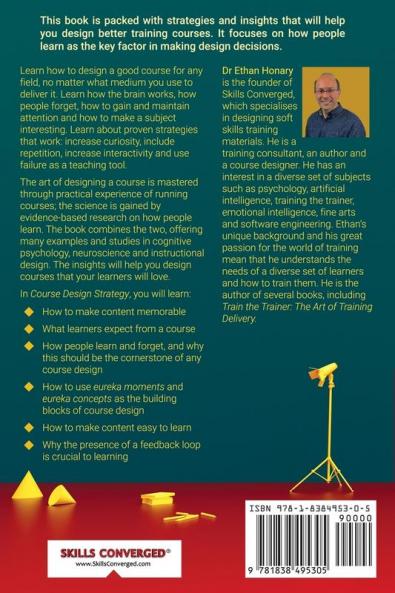
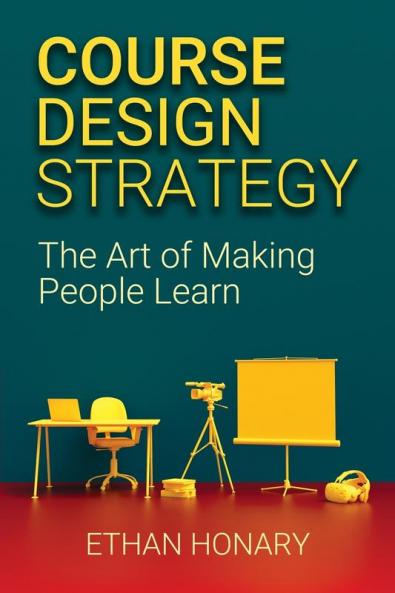
<p>Knowing your subject well and having valuable content to share are essential but they are only part of effective course design. Learners also need to stay attentive make sense of the content and remember it afterwards. <em>Course Design Strategy</em> shows you how to create the conditions in which people can understand practise and retain what they learn.</p><p></p><p>Rather than offering another rigid model or a collection of tips about slides and technology this book explains the principles that should guide your most important design decisions.</p><p>Combining research from cognitive psychology neuroscience and instructional design with practical training experience the book explores memory attention curiosity emotion cognitive load feedback practice and productive failure. It also examines why some familiar training methods feel effective while producing little lasting learning.</p><p></p><p>Written for trainers subject matter experts instructional designers teachers and course creators the principles apply across classroom virtual online and blended learning.</p><p></p><p>In <em>Course Design Strategy</em> you will learn how to:</p><ul><li>Design courses around what learners need to be able to do</li><li>Use memory and forgetting to shape your course structure</li><li>Gain attention and maintain it throughout a course</li><li>Manage cognitive load so learners can remain focused on learning</li><li>Identify the eureka moments and eureka concepts that unlock a subject</li><li>Use curiosity emotion examples and stories to make learning memorable</li><li>Build feedback loops that help learners improve</li><li>Design exercises that make learners retrieve think struggle and learn from mistakes</li><li>Make testing part of learning not just assessment</li></ul><p></p><p>The result is not simply a course that presents information but one that gives learners a genuine chance to understand apply and remember what they have learned.</p>

Piracy-free

Assured Quality

Secure Transactions

Fast Delivery

Sustainably Printed
Details
ISBN 13
9781838495305
Publication Date
-01-07-2021
Pages
-350
Weight
-498 grams
Dimensions
-156x234x18.49 mm
