


English



Paperback
₹1695
₹1811
6.41% OFF
(All inclusive*)
Delivery Options
Please enter pincode to check delivery time.
*COD & Shipping Charges may apply on certain items.
Review final details at checkout.
Looking to place a bulk order? SUBMIT DETAILS

Piracy-free

Assured Quality

Secure Transactions
About The Book
Description
Author(s)
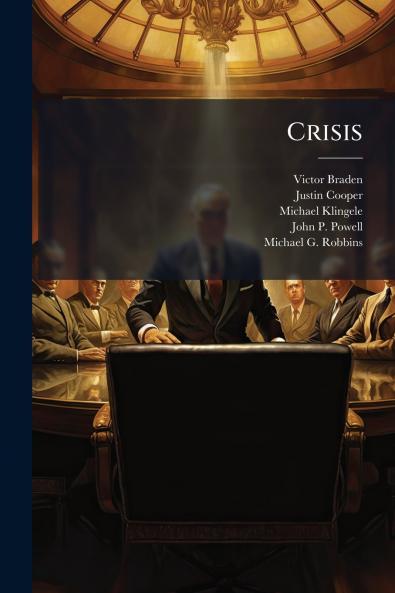
<p>For years crisis management has been synonymous with reactive leadership. This stems from a belief that crisis is both unpredictable and unexpected; but this is simply not true. Crisis develops as an organization's values beliefs culture or behavior becomes incongruent with its operating environment. A leader who is tuned-in to the signals of impending crisis and understands how to harness the urgency brought on by the situation can minimize the potential dangers and maximize the resulting opportunities. This paper presents the Crisis Lifecycle Model as a generic representation of crisis. It illustrates that crisis can be broken into three unique phases. In the first or preparation phase the organization is typically mired in the comfort zone. Here leaders struggle when introducing any change or learning as the organization prefers to avoid conflict and sustain equilibrium. However as crisis hits the organization is jolted into the emergency phase often threatening its very existence. Once the immediate threat is eliminated the organization enters the adaptive phase. In this phase the leader has the attention and urgency to solve the underlying issue that caused the crisis in the first place. Unfortunately many leaders don't take advantage of this opportunity and push the organization back toward the original status-quo ensuring that the crisis will return. The study of crisis leadership is becoming increasingly important as leaders in all walks of life face varying degrees of crisis spawning numerous recent books and articles. From this extensive body of work we found seven essential strategies that are crucial for success. They are to: Lead from the Front Focus on the Core Purpose Build the Team Conduct Continuous Planning Mitigate the Threat Tell the Story and Profit from the Crisis.</p><p>This work has been selected by scholars as being culturally important and is part of the knowledge base of civilization as we know it. This work was reproduced from the original artifact and remains as true to the original work as possible. Therefore you will see the original copyright references library stamps (as most of these works have been housed in our most important libraries around the world) and other notations in the work.</p><p>This work is in the public domain in the United States of America and possibly other nations. Within the United States you may freely copy and distribute this work as no entity (individual or corporate) has a copyright on the body of the work.</p><p>As a reproduction of a historical artifact this work may contain missing or blurred pages poor pictures errant marks etc. Scholars believe and we concur that this work is important enough to be preserved reproduced and made generally available to the public. We appreciate your support of the preservation process and thank you for being an important part of keeping this knowledge alive and relevant.</p><br>
Piracy-free
Assured Quality
Secure Transactions
Delivery Options
Please enter pincode to check delivery time.
*COD & Shipping Charges may apply on certain items.
Review final details at checkout.
Details
ISBN 13
9781025085586
Publication Date
-22-05-2025
Pages
-86
Weight
-136 grams
Dimensions
-156x234x4.52 mm
