

by
Plato
English
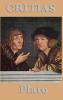


Hardback
₹1739
₹2240
22.37% OFF
(All inclusive*)
Delivery Options
Please enter pincode to check delivery time.
*COD & Shipping Charges may apply on certain items.
Review final details at checkout.
Looking to place a bulk order? SUBMIT DETAILS
Delivery Options
Please enter pincode to check delivery time.
*COD & Shipping Charges may apply on certain items.
Review final details at checkout.
About The Book
Description
Author
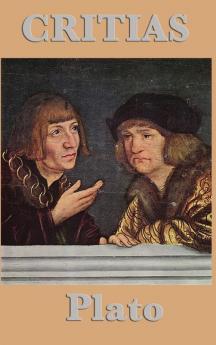
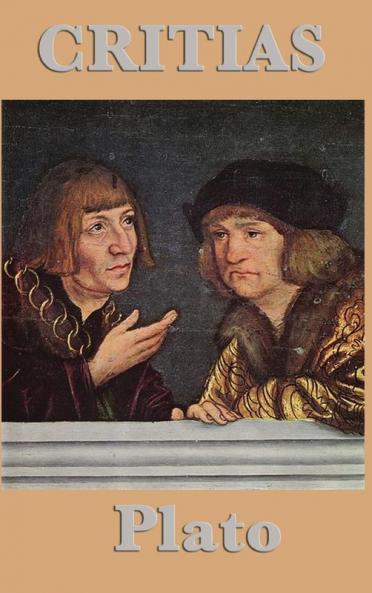
<p><strong><em>Critias</em> is Plato's unfinished dialogue on ancient Athens political virtue and the legendary island power of Atlantis.</strong> Presented as a continuation of the conversation begun in <strong><em>Timaeus</em></strong> the dialogue has Critias recount a story said to have been preserved from Solon: a vast conflict between an idealised ancient Athens and the wealthy imperial sea-power of Atlantis. Though brief and incomplete <strong><em>Critias</em></strong> remains one of the most influential classical sources for the Atlantis tradition and a revealing work in Plato's larger examination of politics order civic virtue memory and decline.</p><p>The dialogue should not be treated merely as a curiosity about a lost island. Its importance lies in the way Plato uses mythic history to test political ideals contrasting disciplined civic excellence with luxury expansion and moral corruption. For readers of ancient philosophy classical literature Greek political thought utopian writing and the long literary afterlife of Atlantis <strong><em>Critias</em></strong> offers a compact but essential text: fragmentary in form yet enduring in influence.</p>

Piracy-free

Assured Quality

Secure Transactions

Fast Delivery

Sustainably Printed
Details
ISBN 13
9781515431459
Publication Date
-03-04-2018
Pages
-32
Weight
-147 grams
Dimensions
-152x229x6.35 mm
