

English


Paperback
₹8169
₹10784
24.25% OFF
(All inclusive*)
Delivery Options
Please enter pincode to check delivery time.
*COD & Shipping Charges may apply on certain items.
Review final details at checkout.
Looking to place a bulk order? SUBMIT DETAILS

Piracy-free

Assured Quality

Secure Transactions
About The Book
Description
Author
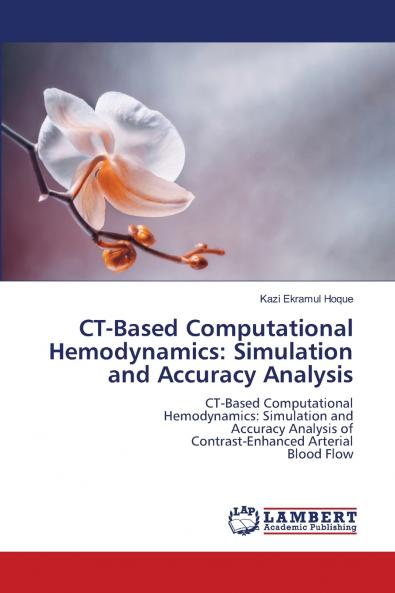
Cardiovascular diseases particularly atherosclerosis remain the leading cause of death worldwide. This study employs computational fluid dynamics (CFD) coupled with cardiac computed tomography (CT) to simulate coronary blood flow in both idealized and patient-specific models. Different sizes of atherosclerotic plaques were introduced near bifurcations and curved regions to investigate their hemodynamic effects. The simulations provided non-invasive assessments of key parameters including blood velocity wall shear stress (WSS) relative pressure difference and fractional flow reserve (FFR). These parameters offer valuable insights into coronary stenosis severity and lumen narrowing which are closely associated with heart attacks. The CT-based CFD framework demonstrates potential as a non-invasive alternative to catheter-based FFR evaluation in coronary artery disease diagnosis.
Piracy-free
Assured Quality
Secure Transactions
Delivery Options
Please enter pincode to check delivery time.
*COD & Shipping Charges may apply on certain items.
Review final details at checkout.
Details
ISBN 13
9786209200212
Publication Date
-02-12-2025
Pages
-100
Weight
-148 grams
Dimensions
-152x229x6.08 mm
