



Paperback
₹6508
(All inclusive*)
Delivery Options
Please enter pincode to check delivery time.
*COD & Shipping Charges may apply on certain items.
Review final details at checkout.
Looking to place a bulk order? SUBMIT DETAILS
Delivery Options
Please enter pincode to check delivery time.
*COD & Shipping Charges may apply on certain items.
Review final details at checkout.
About The Book
Description
Author
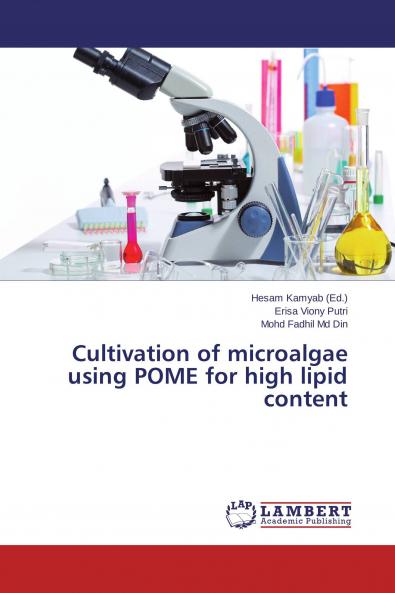
Microalgae are reported as the potential resources to produce lipid from their biomass cell. Lipid is generally a group of organic compound that important as primary biofuel raw material and also as component for foods cosmetic products fertilizers animal feed etc. As the resources of lipid production from synthetic media are costly therefore the derivation of cheap sources from waste is useful in massive scale. Hence the study is emphasized on the effectiveness of industrial wastewater such as palm oil mill effluent (POME) as main carbon source to maintain the growth of microalgae and simultaneously increase the lipid content. Furthermore investigation of five selected strains of green microalgae are applied namely Chlorella vulgaris (Korean Collection for Type Cultures (KCTC) Biological Resource Center (BRC)) Chlorella pyrenoidosa (POME) Chlorella sorokiniana (UTEX 1602) Botryococcus sudeticus (UTEX 2629) and Tetraselmis sp (UTEX 2767). The study demonstrated that Chlorella sorokiniana is the predominant species for specific growth rate (?)biomass productivity and lipid content in diluted POME with the value 0.099/day 8.0 mg/L.day 2.68 mg lipid/mg Cell Dry Weight.

Piracy-free

Assured Quality

Secure Transactions

Fast Delivery

Sustainably Printed
Details
ISBN 13
9783659743481
Publication Date
-18-06-2015
Pages
-156
Weight
-221 grams
Dimensions
-150x220x8.61 mm
