

English



Hardback
₹13172
₹17489
24.68% OFF
(All inclusive*)
Delivery Options
Please enter pincode to check delivery time.
*COD & Shipping Charges may apply on certain items.
Review final details at checkout.
Looking to place a bulk order? SUBMIT DETAILS
Delivery Options
Please enter pincode to check delivery time.
*COD & Shipping Charges may apply on certain items.
Review final details at checkout.
About The Book
Description
Author
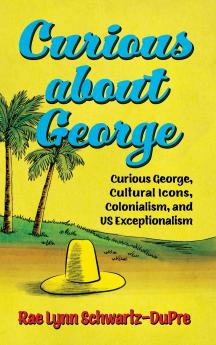
In 1940 Hans Augusto Rey and Margret Rey built two bikes packed what they could and fled wartime Paris. Among the possessions they escaped with was a manuscript that would later become one of the most celebrated books in children's literature--<i>Curious George</i>. Since his debut in 1941 the mischievous icon has only grown in popularity. After being captured in Africa by the Man in the Yellow Hat and taken to live in the big city's zoo Curious George became a symbol of curiosity adventure and exploration. In <i>Curious about George: Curious George Cultural Icons Colonialism and US Exceptionalism</i> author Rae Lynn Schwartz-DuPre argues that the beloved character also performs within a narrative of racism colonialism and heroism. <p/> Using theories of colonial and rhetorical studies to explain why cultural icons like Curious George are able to avoid criticism Schwartz-DuPre investigates the ways these characters operate as capacious figures embodying and circulating the narratives that construct them and effectively argues that discourses about George provide a rich training ground for children to learn US citizenship and become innocent supporters of colonial American exceptionalism. By drawing on postcolonial theory children's criticisms science and technology studies and nostalgia Schwartz-DuPre's critical reading explains the dismissal of the monkey's 1941 abduction from Africa and enslavement in the US described in the first book by illuminating two powerful roles he currently holds: essential STEM ambassador at a time when science and technology is central to global competitiveness and as a World War II refugee who offers a deficient version of the Holocaust while performing model US immigrant. Curious George's twin heroic roles highlight racist science and an Americanized Holocaust narrative. By situating George as a representation of enslaved Africans and Holocaust refugees <i>Curious about George</i> illuminates the danger of contemporary zero-sum identity politics the colonization of marginalized identities and racist knowledge production. Importantly it demonstrates the ways in which popular culture can be harnessed both to promote colonial benevolence and to present possibilities for resistance.

Piracy-free

Assured Quality

Secure Transactions

Fast Delivery

Sustainably Printed
Details
ISBN 13
9781496837332
Publication Date
-29-10-2021
Pages
-228
Weight
-403 grams
Dimensions
-152x229x17.46 mm
