


by
MORITZ
English



₹12836
₹16459
22.01% OFF
(All inclusive*)
Hardback
Delivery Options
Please enter pincode to check delivery time.
*COD & Shipping Charges may apply on certain items.
Review final details at checkout.
Looking to place a bulk order? SUBMIT DETAILS
Delivery Options
Please enter pincode to check delivery time.
*COD & Shipping Charges may apply on certain items.
Review final details at checkout.
About The Book
Description
Author
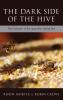
Honey bees have been described as exceptionally clever well-organized mutualistic collaborative busy efficient--in short a perfect society. While the colony is indeed a marvel of harmonious efficient organization it also has a considerable dark side. Authors Robin Moritz and Robin Crewe write about the life history of the honey bee Apis mellifera highlighting conflict rather than harmony failure rather than success from the perspective of the individual worker in the colony. When one looks carefully the honey bee colony is far from being perfect. As with any complex social system honeybee societies are prone to error robbery cheating and social parasitism. Nevertheless the hive gets by remarkably well in spite of many seemingly odd biological features. The perfection that is perceived to exist in the honeybee''s social organization is the function of a focus on the colony as a whole rather than exploring the idiosyncrasies of its individual members. The Dark Side of the Hive thus focuses on the role of the individual rather than that of the collective. Moritz and Crewe dissect the various careers that individual male and female honey bees can take and their role in colony organization. Competition between individuals using both physical and chemical force drives colonial organization. This book deals with individual mistakes maladaptations and evolutionary dead-ends that are also part of the bees'' life. The story told about these dark sides of the colony spans the full range of biological disciplines ranging from genomics to systems biology.

Piracy-free

Assured Quality

Secure Transactions

Fast Delivery

Sustainably Printed
Details
ISBN 13
9780190872281
Publication Date
-29-11-2018
Pages
-208
Weight
-395 grams
Dimensions
-156x234x12.7 mm
