



English




Hardback
₹14673
₹18368
20.12% OFF
(All inclusive*)
Delivery Options
Please enter pincode to check delivery time.
*COD & Shipping Charges may apply on certain items.
Review final details at checkout.
Looking to place a bulk order? SUBMIT DETAILS
Delivery Options
Please enter pincode to check delivery time.
*COD & Shipping Charges may apply on certain items.
Review final details at checkout.
About The Book
Description
Author
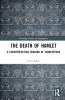
<p>This book is an intervention in <i>Hamlet</i> scholarship. In <i>Thus Spake Zarathustra</i> (1885) Nietzsche famously posited the death of God taken to mean the dissolution of all horizons within which human beings construct a plausible ontology that gives words significance. The idea of God as a transcendental signified (to borrow from Derrida) underwrites meaning and values. Socrates placed knowing as the highest philosophical good over two millennia ago; however once we find that God (i.e. any transcendental signified) is unknowable the world vanishes. In a world bereft of concepts and meaning Nietzsche’s philosophical project becomes one of “redeeming” pure willing as itself constitutive of world.</p><p><i>Hamlet</i> and the criticism surrounding it is caught within competing horizons we know are circuitous and unending. We tiresomely make theoretical rounds between competing sets of interpretations that boil down to either establishing meaning within the play (the text transcending its history and revealing universal truths) or situating the text within its proper historical timeframe in order to get it to speak. In short we are trapped between contextualizing and decontextualizing approaches. Yet we know both approaches as competing horizons we commit to at the outset are dead. But to abandon both at the outset means that the text <i>Hamlet</i> is itself dead. So how to get it to speak?</p>

Piracy-free

Assured Quality

Secure Transactions

Fast Delivery

Sustainably Printed
Details
ISBN 13
9781032734620
Publication Date
-07-01-2025
Pages
-142
Weight
-291 grams
Dimensions
-151.89x229.11x9.3 mm
