


This Book is Out of Stock!
English


Paperback
₹2836
₹3465
18.15% OFF
(All inclusive*)
Delivery Options
*COD & Shipping Charges may apply on certain items.
Review final details at checkout.
Looking to place a bulk order? SUBMIT DETAILS
*COD & Shipping Charges may apply on certain items.
Review final details at checkout.
₹2836
₹3465
18% OFF
Paperback
Out Of Stock
All inclusive*
About The Book
Description
Author(s)
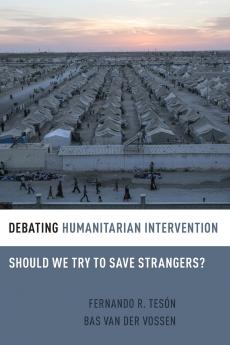
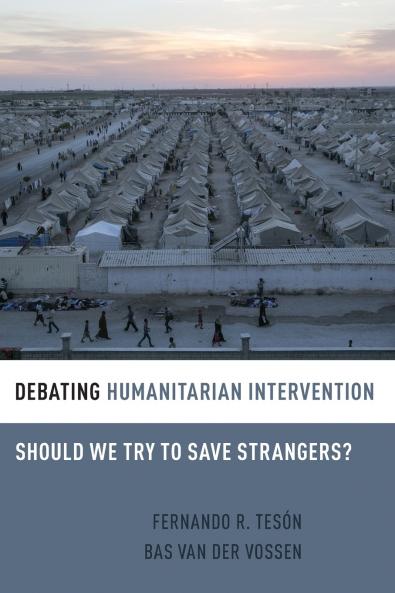
When foreign powers attack civilians other countries face an impossible dilemma. Two courses of action emerge: either to retaliate against an abusive government on behalf of its victims or to remain spectators. Either course offers its own perils: the former lost lives and resources without certainty of restoring peace or preventing worse problems from proliferating; the latter cold spectatorship that leaves a country at the mercy of corrupt rulers or to revolution. <p/>Philosophers Fernando Teson and Bas van der Vossen offer contrasting views of humanitarian intervention defining it as either war aimed at ending tyranny or as violence. The authors employ the tools of impartial modern analytic philosophy particularly just war theory to substantiate their claims. According to Teson a humanitarian intervention has the same just cause as a justified revolution: ending tyranny. He analyzes the different kinds of just cause and whether or not an intervener may pursue other justified causes. For Teson the permissibility of humanitarian intervention is almost exclusively determined by the rules of proportionality. Bas van der Vossen by contrast holds that military intervention is morally impermissible in almost all cases. Justified interventions Van der Vossen argues must have high <em>ex ante </em>chance of success. Analyzing the history and prospects of intervention shows that they almost never do. <p/>Teson and van der Vossen refer to concrete cases and weigh the consequences of continued or future intervention in Syria Somalia Rwanda Bosnia Iraq Lybia and Egypt. By placing two philosophers in dialogue <em>Debating Humanitarian Intervention</em> is not constrained by a single unifying solution to the exclusion of all others. Rather it considers many conceivable actions as judged by analytic philosophy leaving the reader equipped to make her own informed judgments.<br>

Piracy-free

Assured Quality

Secure Transactions

Fast Delivery

Sustainably Printed
Details
ISBN 13
9780190202910
Publication Date
-01-11-2017
Pages
-290
Weight
-335 grams
Dimensions
-140x210x16.58 mm
